The Masks We Wear
by Thaddeus Ressler
 The world is a scary place, but masks offer us armor against exposing our true selves. Psychologist talk about the constellation of personalities that make up who we are. These are just masks though. We put on a different face at work than the fun one we put on for friends, or the more intimate one we put on for lovers. Different ways of presenting ourselves, different ways of addressing the world and how we’re being perceived by it. There are figurative masks like these and then there are literal masks.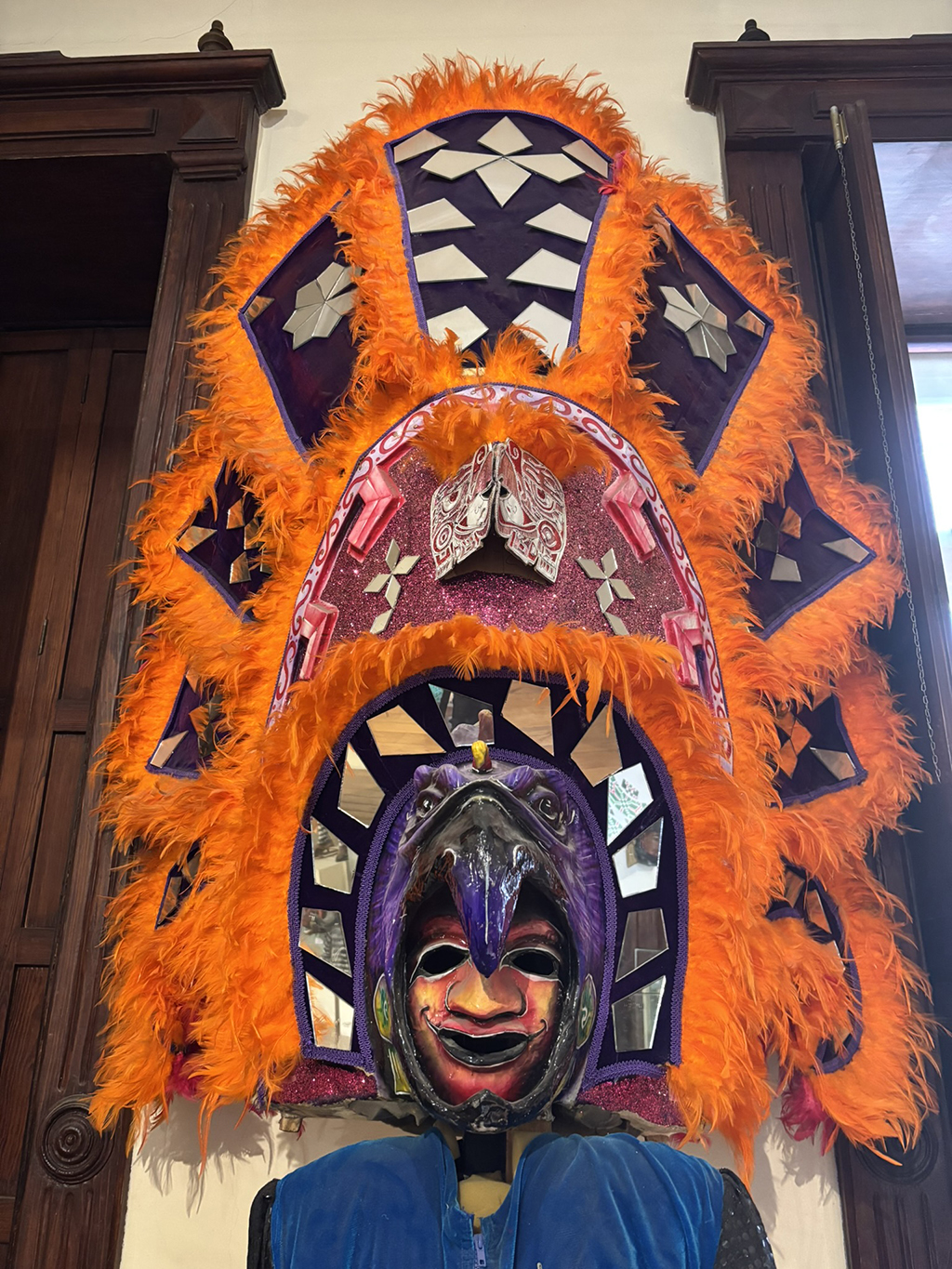
Masks have been a part of humanity for as long as humans have been human. They allowed witch doctors to embody deities that protected the village, or ended the drought. Actors use them to create characters and enhance storytelling, not to mention bringing monsters and demons to life. And sometimes they’re simply for fun, like in the case of Halloween, a costume party, or a parade.
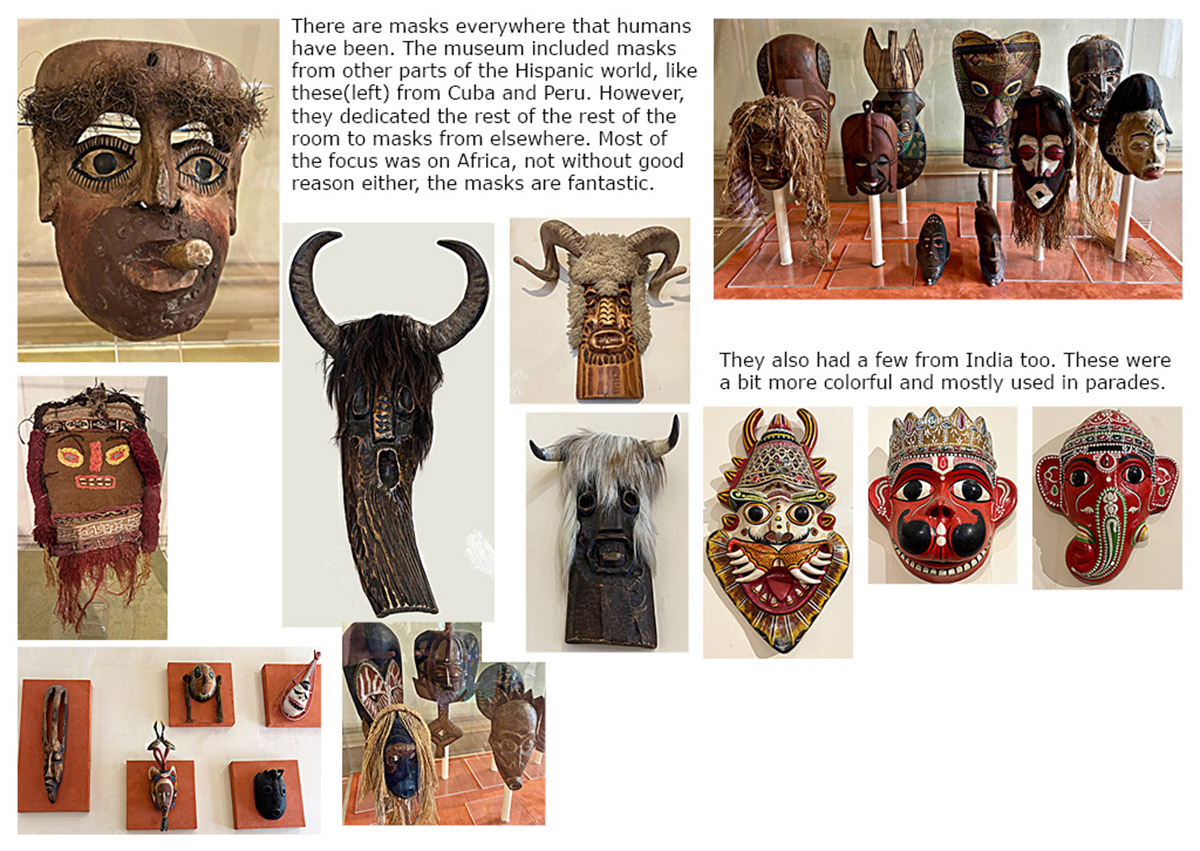
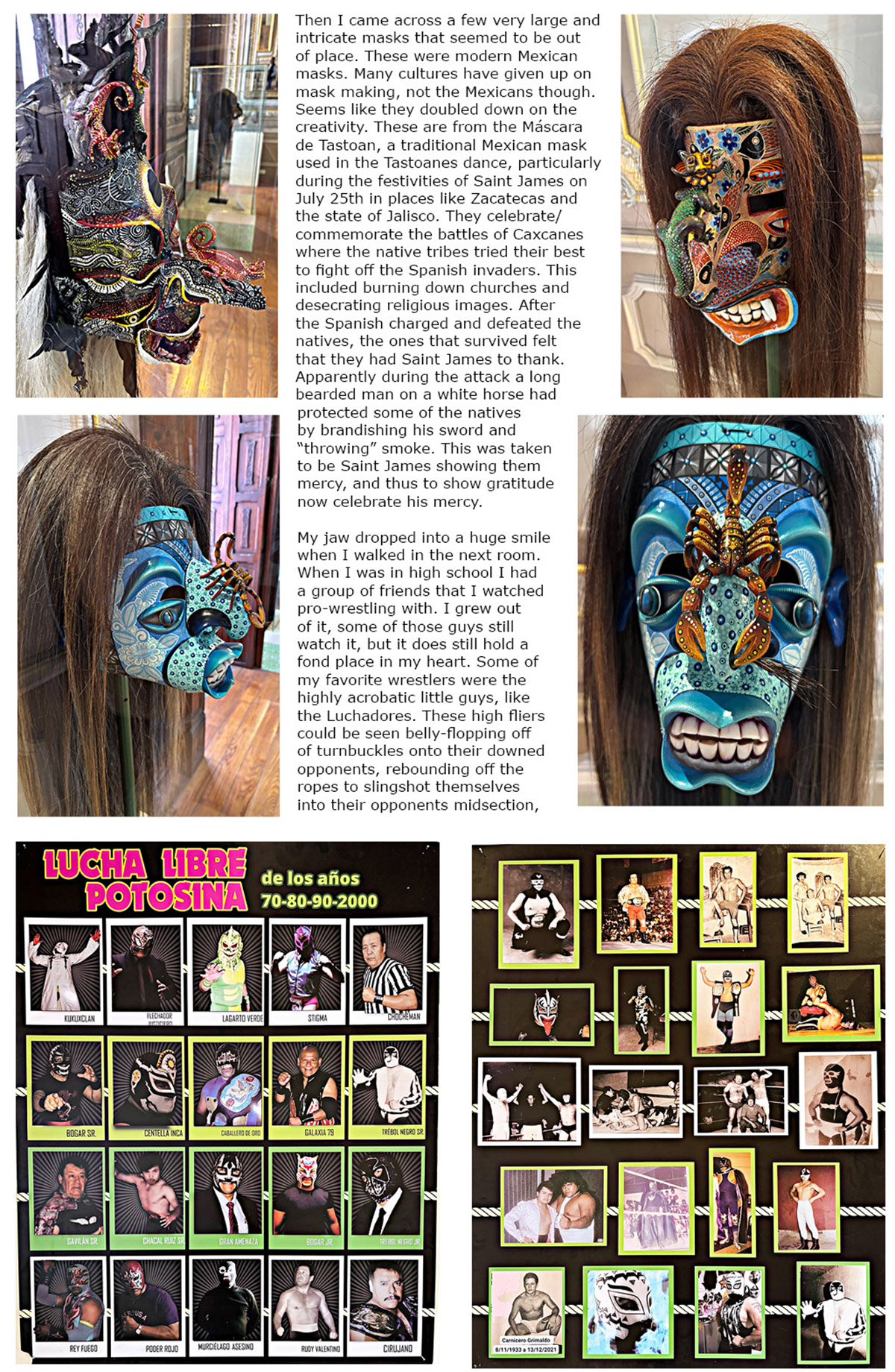
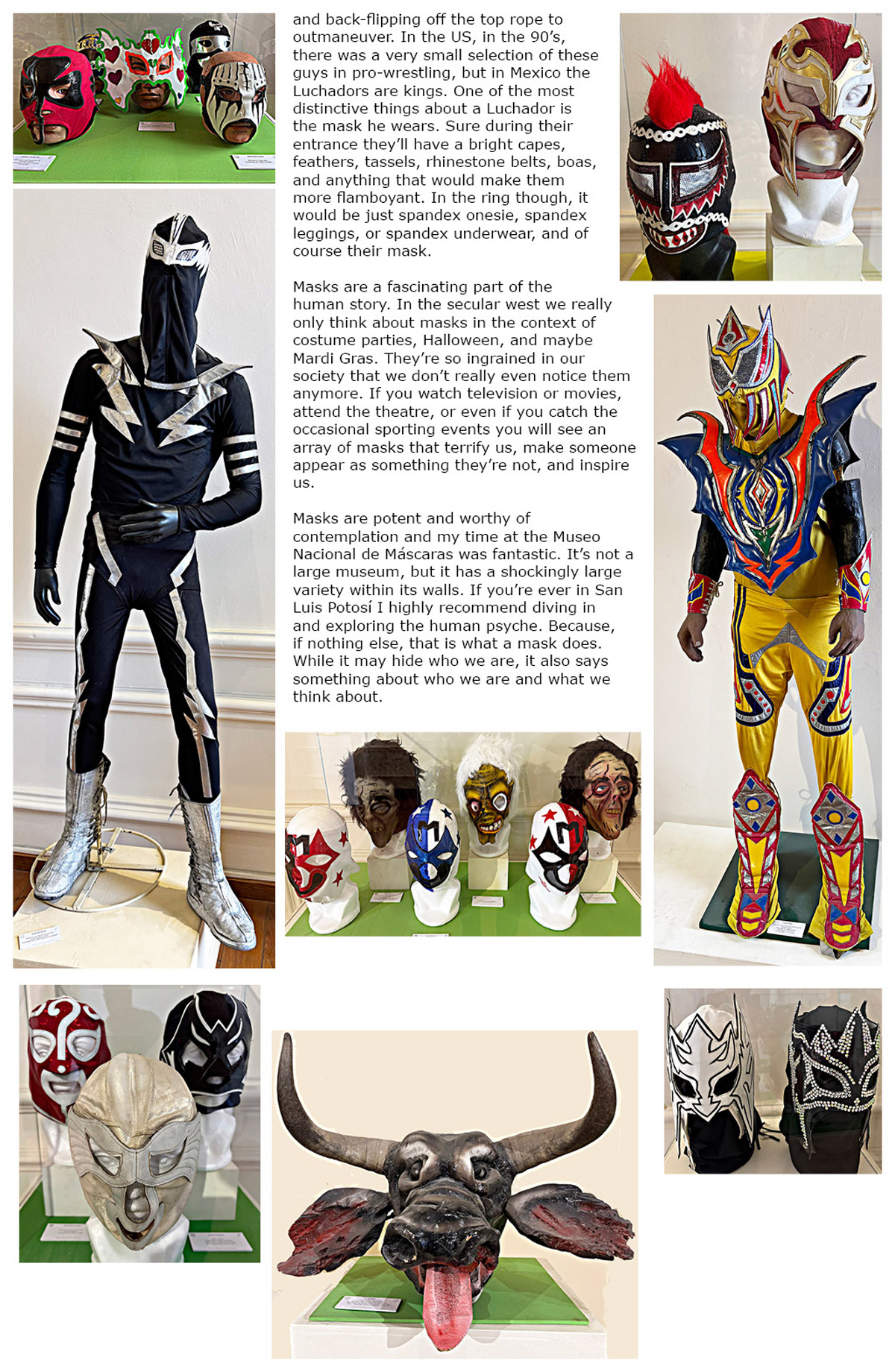
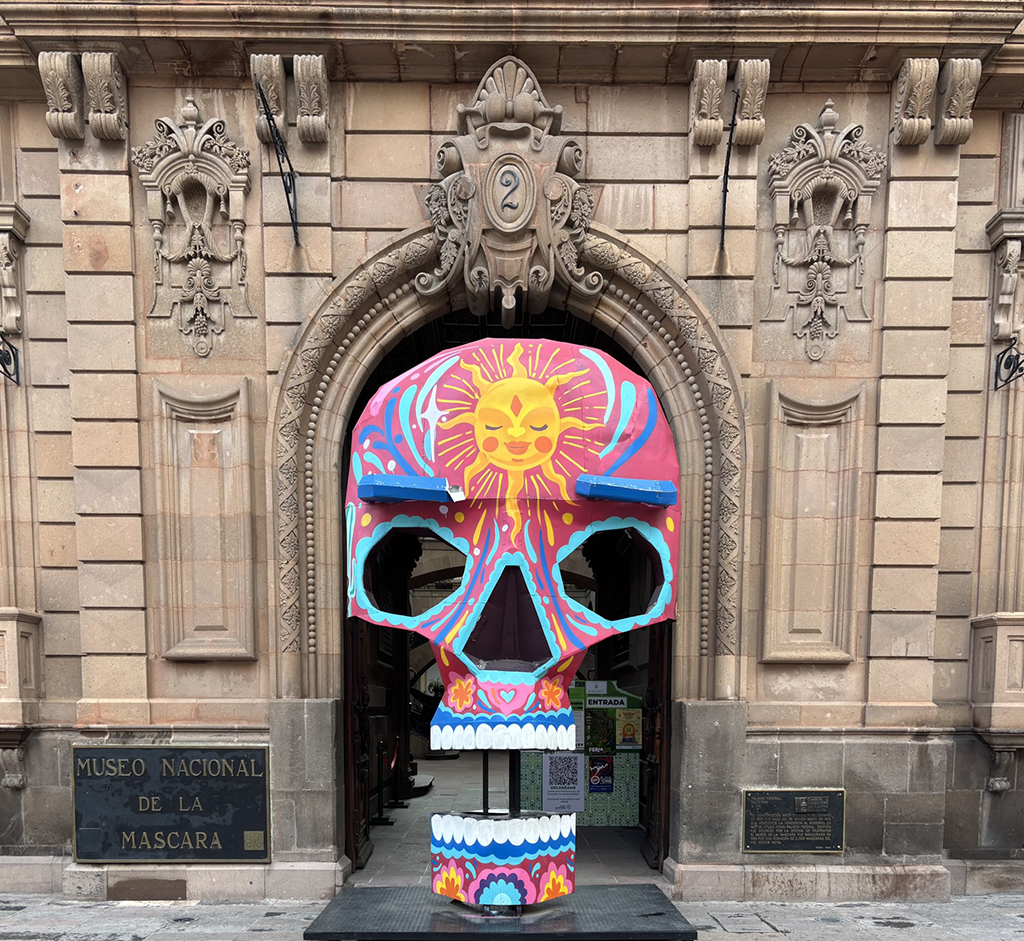
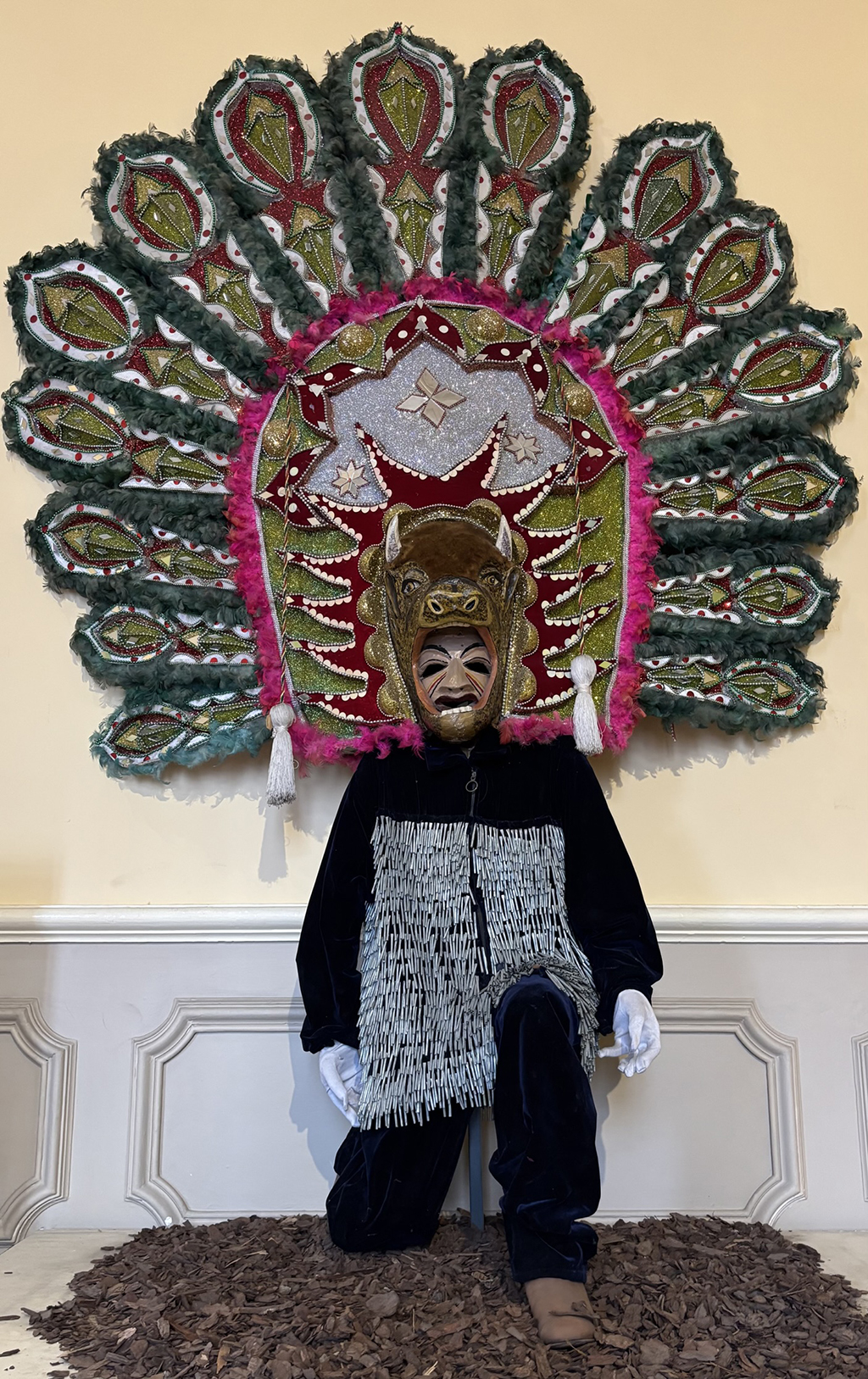 San Luis Potosí has an entire museum dedicated to the mask, The Museo Nacional de La Máscara. A building that weaves through two stories of masks starting with ancient burial masks and ending in the masks used in Carnival processions. They spend most of the time focused on Mexican masks, but there is an “international room.”
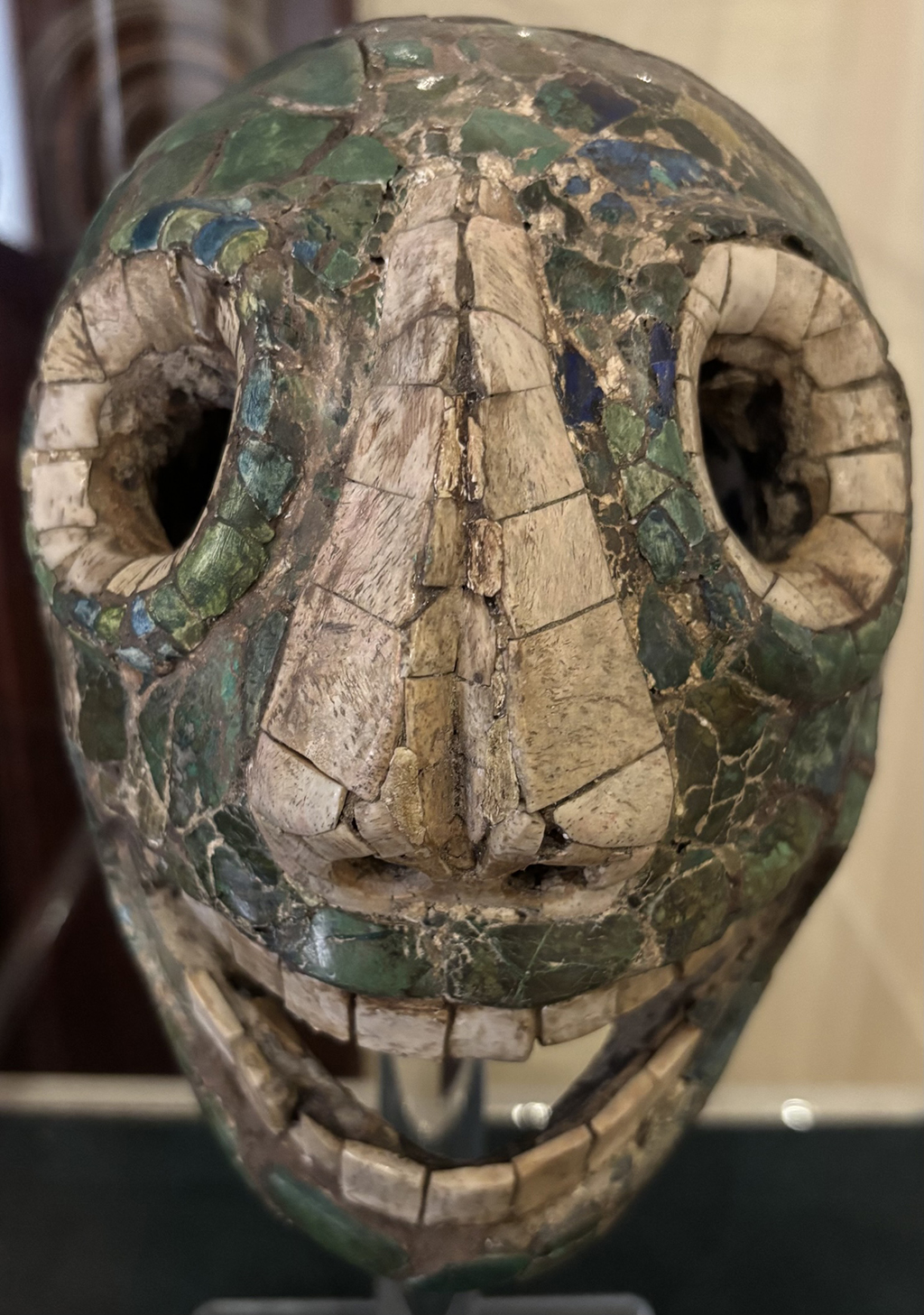 The masks of the ancients were made from wood, clay, leather, stone, really any substance or combination of substances that would form the shapes they needed. These masks could include specialty items like feathers, precious stones, teeth (both human and animal), bones, antlers, shells, or anything that made ‘em feel giddy. The masks were used to confer fertility, protection, abundance, good luck for them and bad luck for others. They could be used to call down the gods to divine information or dole out justice.
 Burial masks were used to present an idealized version of the deceased. If you’ve ever been to an open casket funeral you might understand why a mask made of jade might be preferred.
 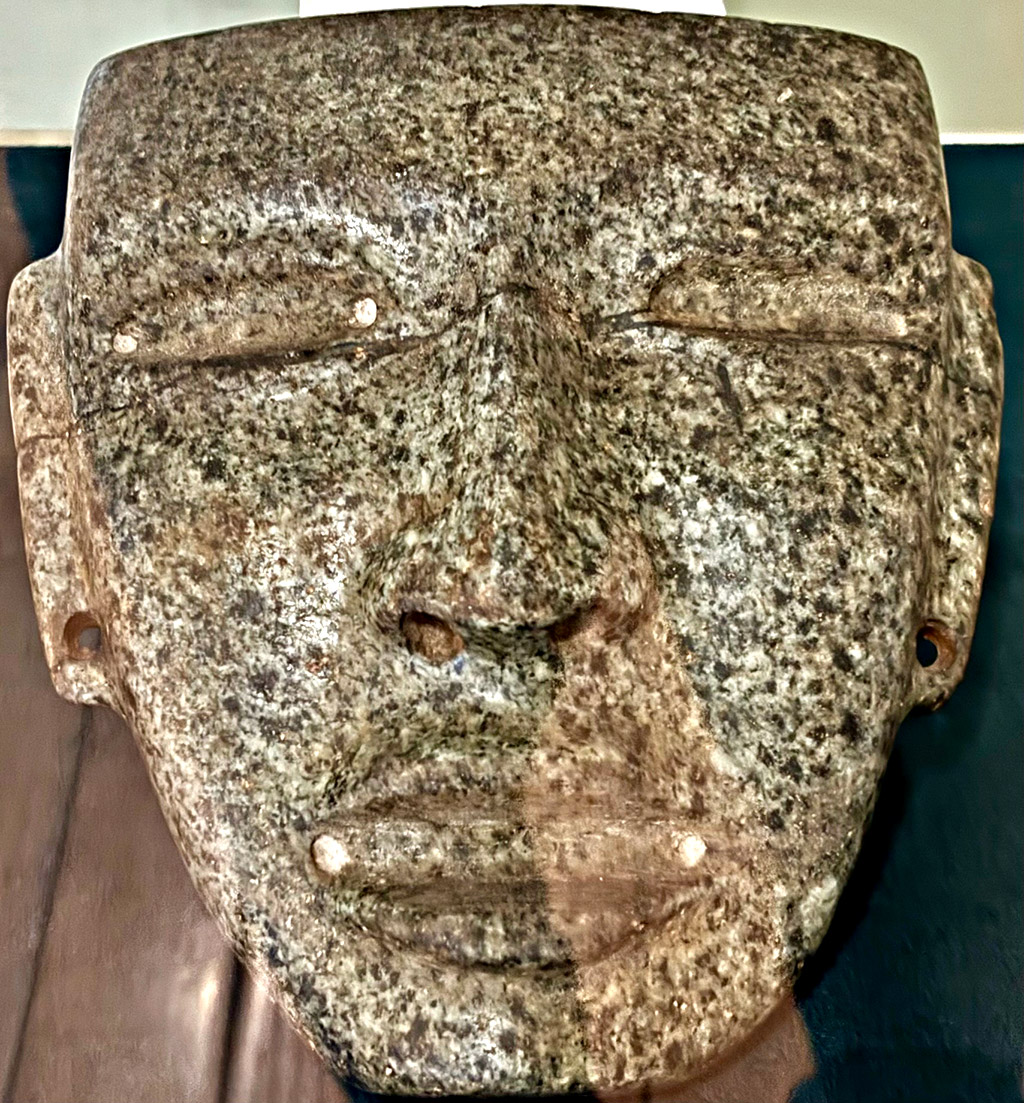 In per-Hispanic Mexico the funerary mask conveyed their deep reverence for the dead. The officiating priest would perform rituals wearing the mask and then place the mask on the dead. The jade used in the masks was considered valuable and made a wealth statement, but it was also meant to confer immortality, ward off evil spirits and help them on their journey into the afterlife.
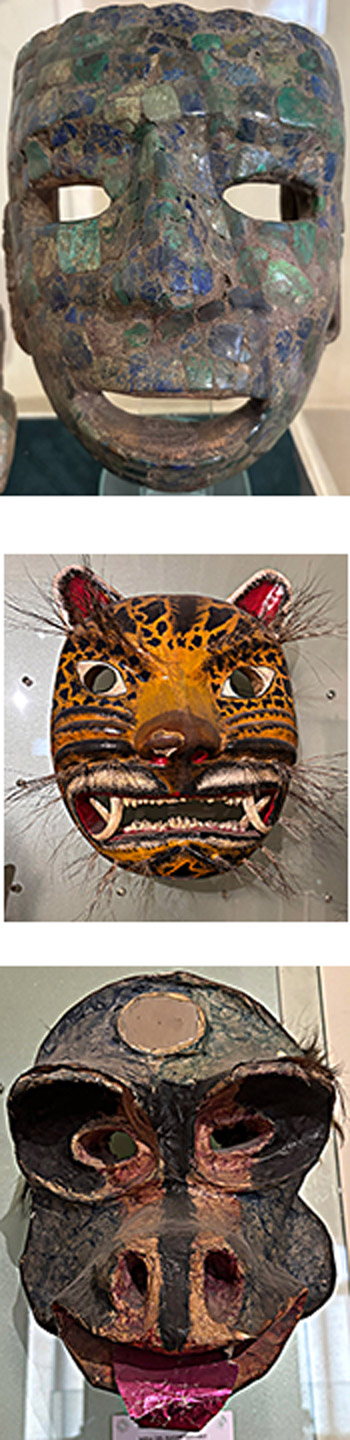
Funerary masks are all well and good, but those tended to be reserved for VIP’s. One of the more popular types of ritual masks of the ancients were those of animals, intended to help the wearer embody the characteristics of an animal. 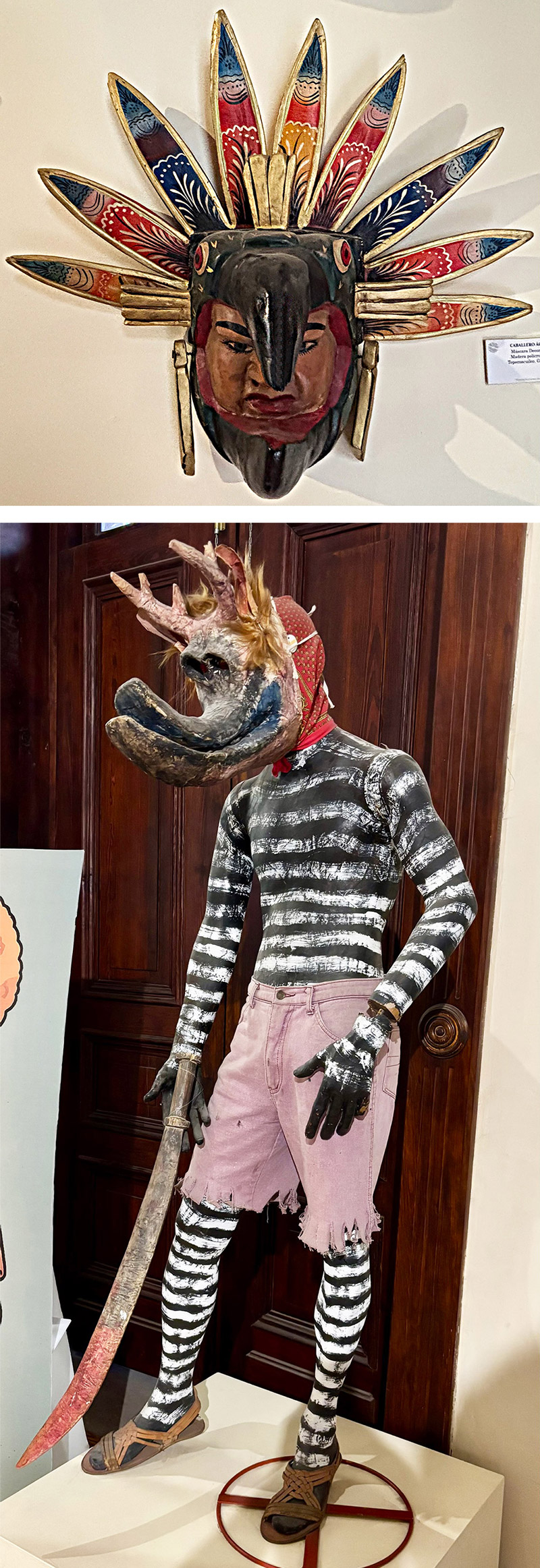 There’s the classic Eagle Warriors like the one to the right. Other warriors might try to embody the fierceness of the Tecuani, or beasts that eat, like the jaguar or wolf. Or maybe to take on the cleverness of a monkey, or the night vision of a bat. God knows what this guy(right) is supposed to be, but I’ll tell you if I saw him running at us with that sword over his head, good luck catching up to me.
Mexicans being Mexicans though, the broadest category is most likely the celebratory and processional masks. 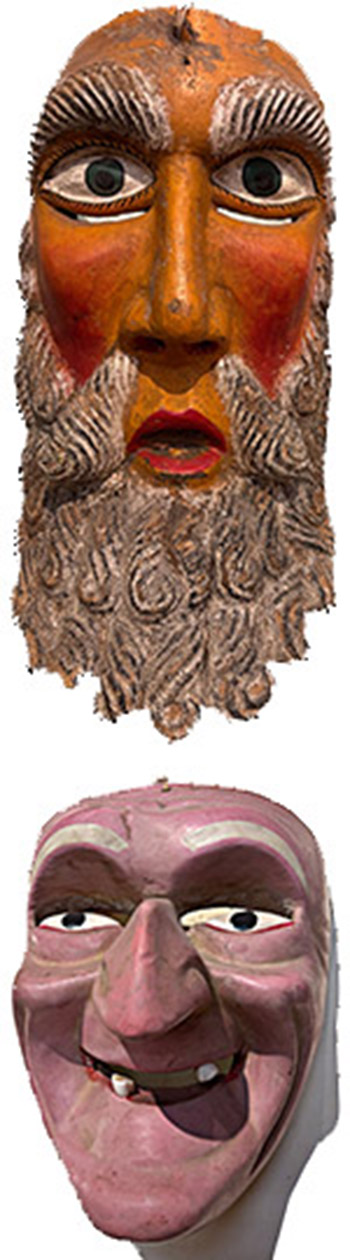 Solemn is a word that exists in Mexico, but from what I’ve seen publicly, it embodies a different connotation than what we think of in the United States. Dancing and loud music seems to accompany even the solemn processions. While the people may walk quietly there are almost always trumpets and drums leading the way. In these parades and festivals you will often find people wearing masks of all types.
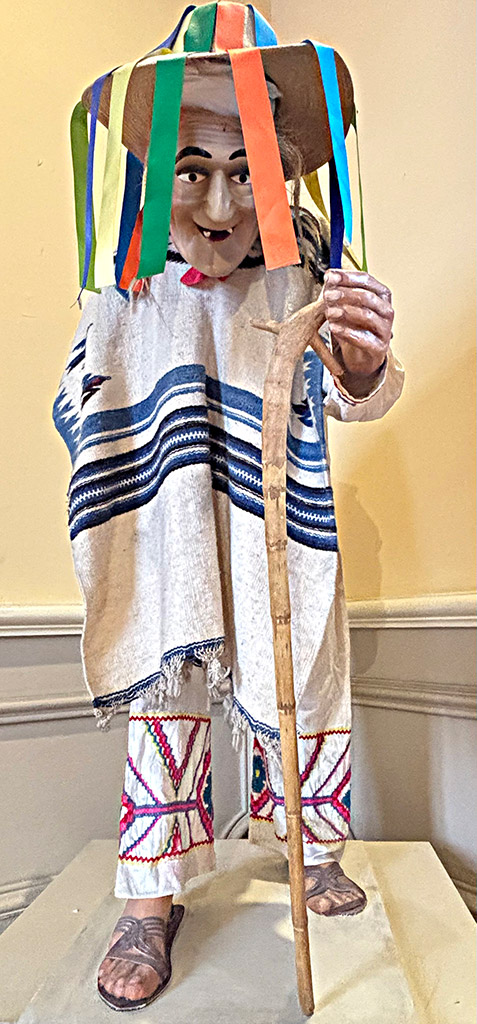 I got to see The Danzas De Los Viejitos(right), or dance of the little old men, on the streets of Patzcuaro in Michoacán. Their smiling pink masks with white eyebrows are almost as much fun as the broad brimmed hats and clacking dance that the young men inside the costumes do.
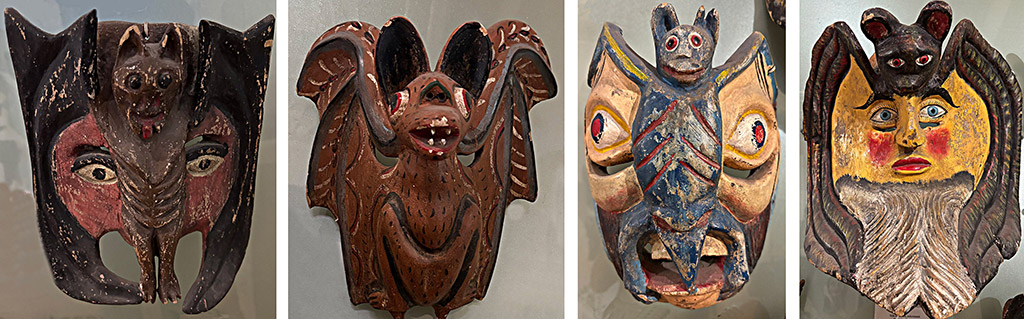
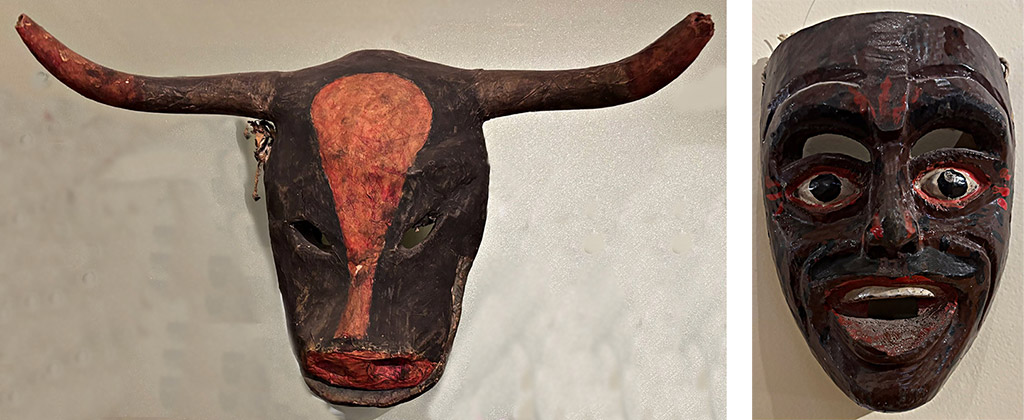 There’s a variety of non-combat related animal masks too. Including(left) bull masks and a “fish:” mask. If the sheer number of them on the walls counts for anything bats have got to be their favorite animals. There’s even a “La Danza de los Murciélagos,” or dance of the bats, which symbolizes the hunter, closeness with nature and the natural world. In a land of many insects, bats would be seen as helpers and protectors.
Then of course there are the myriad of devil masks that come from all over and rarely have any more significance than they would to an American during Halloween. Except that the masks that Mexicans use are not the cheap little plastic dollar store types that you don’t remember.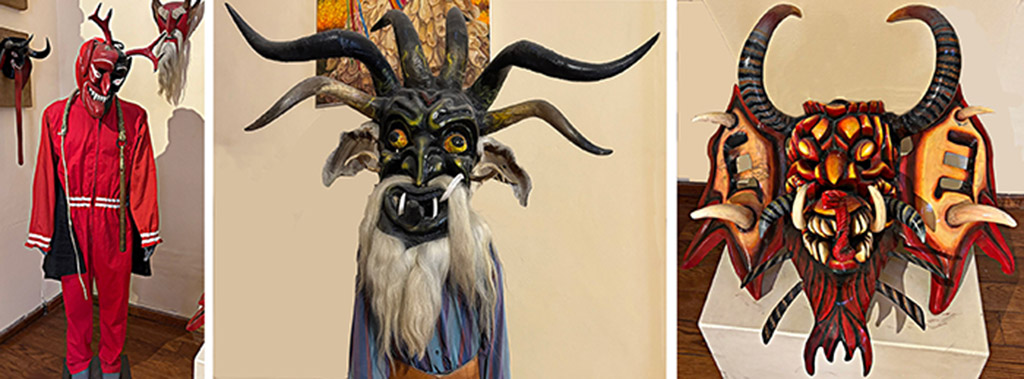
These are far more intricate and interesting than anything you could buy in a store. The devil is real here and they do take him seriously. I will say that they are some of my favorite masks. Something about the immense creativity that goes into them really makes me smile, I am a heathen though.