Ancient Zapotec Rugs & Old School Mezcal
by Thaddeus Tripp Ressler
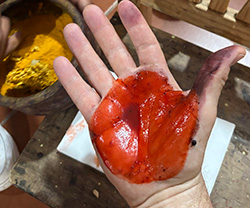
Jorge asked for volunteers. I laughed considering it was just me and Gabby. He walked over to a cactus paddle that was hanging from a rafter. It had a white dust all over it that made me think that it was just a dusty ornament. He plucked something out of it and walked back over to us. 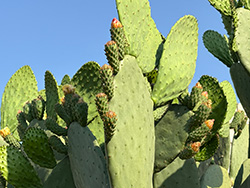 He motioned for me to hold out my hand, and I did. He dropped a small white thing in the center of my palm. It looked about the size of a fat grain of rice, which might have been why he called it un grano. Upon closer inspection I had no idea what this foreign little thing reminded me of, maybe a tiny pinecone. Jorge grabbed my hand and took his pointer finger and crushed the thing into my hand. As he started to rub circles into my palm a bright red circle appeared as if by magic. Cochineal!
I knew it somewhere in my brain! It’s a bug that lives on cacti. Specifically the Nopal cactus, which is a farmed crop here in Mexico. The young paddles, known as nopales, are harvested and cooked up and used in everything from salads and soups, to grilled meats dishes and tacos. The bright red fruits, which Mexicans call tuna, are sweet and juicy, reminiscent of dragon fruit, or watermelon. The cochineal bug infects the pads of the cactus spreading a white substance over them. They’ll cluster and then spread, clustering again, and then spreading again. Those little guys produce carmine, a natural dye, that indigenous people of the Americas have been using on textiles for over two thousand years. One only needs to brush the bugs off the plant and crush it up, and voila, a rich red dye.
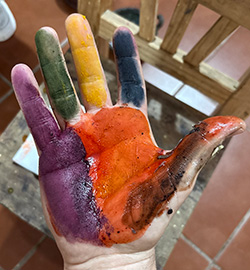 But then our new friend showed us something even cooler. He started doing chemistry on my hand. He squeezed a bit of lime juice into my hand the color turned from deep red into a brighter red. Then he added a bit of ground up marigold, turning it to an orangey-red. A bit of baking soda rubbed into the pinky side of my palm, made it transform to a plum color. I can’t remember how he made the green color, but by the end my hand looked like a painters palette.
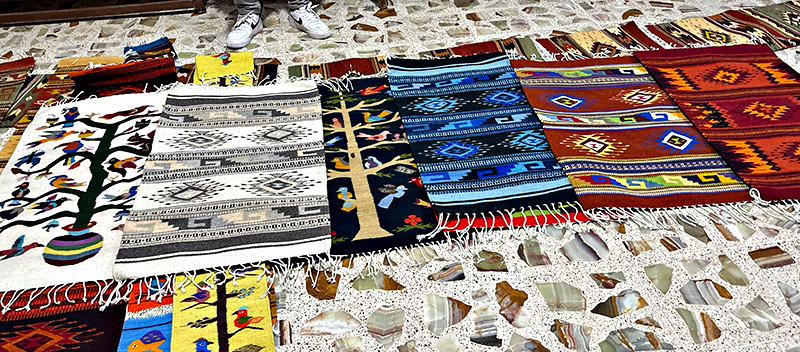
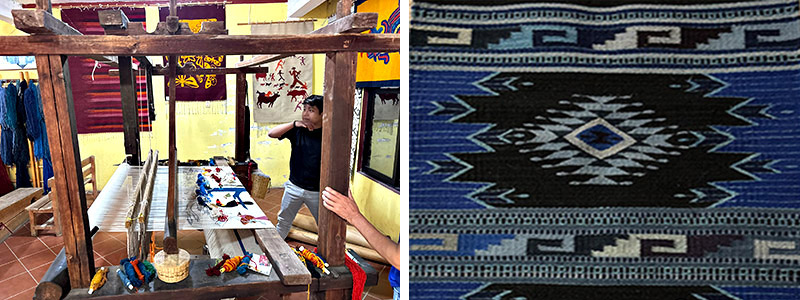
After washing my hands, it was on to the weaving. Thanks to my parents, I am quite familiar with looms. I spent a whole summer weaving with a loom that my grandfather and I had modified to make ribbon fabric. I hadn’t made any designs, just placed the ribbons as aesthetically as my seventeen year old brain could muster. These guys, however, were putting animals and geometric designs into their wool rugs. He showed us how they would weave individual bundles of yarn that make up the weft(across), to match the outline drawn onto the warp yarns(lengthwise). Then if it was at the front of the weft he could pull back on the beater, or if the beater couldn’t reach it, he would use a comb to pull the yarn tight into the rug. Jorge told us the stories behind the patterns on the rugs. The steps represented the steps of life, and the geometric spirals represented death and rebirth. The central part was meant to be the eye of god.
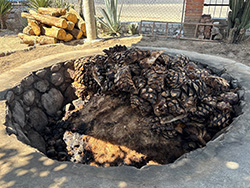 This had turned into a really fun and educational day. Gabby and I had been packing in the sights as best we could, since I only had a week in Oaxaca. Before this we had come from down the road at a mezcaleria, where we learned how mezcal is made. Well, because of my tenure behind the bar, I’ve actually taken many classes on the fermentation, distillation, barreling, and bottling processes. However, it was very cool to see the mezcal process up close and personal in a place that’s actually making it, rather than seeing the pictures or videos on a screen. Nothing can compare to the burnt wood smells of the roasting pit, or the fruity funk of the agave mash fermenting. Plus, not a one of those classes I took offered up slices of freshly roasted agave to try, and that transformed the way that I thought about the flavors in Mezcal and Tequila. It had a sweet-sour, earthy, honey thing going on in it. Because it’s so complex, it’s hard to pinpoint exact flavors, but good lord did it taste good.
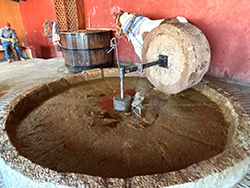 A quick walkthrough of the Mezcal process is as follows: allow agave to grow for ten years, cut all the leaves off and pull “piña” out of the ground, cover with aforementioned leaves and roast piñas for a few days in a pit loaded with coals underneath and over top. After that mash the piñas under a huge circular millstone dragged in circles by an unamused looking horse or donkey. Then take the mashed up agave and mix with water to extract all the sugars out and then allow to ferment. Strain out pulp from mash and allow to continue fermenting for another week or two. Then distill out the alcohol, maybe even a few times. Then serve with chili-salt and a wedge of lime.
It doesn’t seem like it, but this is a similar process to making any other kind of alcohol. Want to make the most basic beer? Just boil malted grain to extract all the sugars, strain it out, and then ferment it with yeast for a few weeks. For wine you would mix fruit juice with yeast and then let it ferment for a few weeks. Then to make liquor from it, you would distill the alcohol out of it. It just requires the right equipment, which can be improvised handily for under $100. That said, there’s good reasons why home distilling doesn’t get the same allowances that home brewing does. Click this link to see a short video Agave Mash.
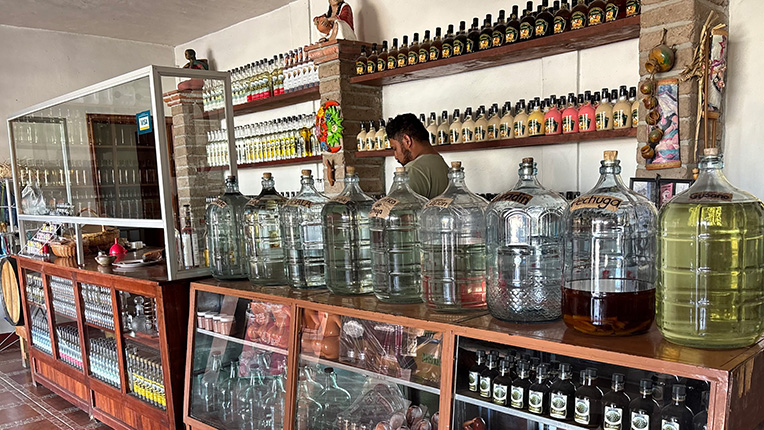
At the end of the tour we got to taste several varieties that they happened to have for sale. Some were specific agave varietals, others were infused with fruits or herbs. I bought a bottle of an agave varietal called Tobala for a friend back home, and Gabby grabbed one for herself because in her words. “This is Mexico. You don’t know when somebody comes to the house. You might need Mezcal.”
__________________________________________________________________________________________________________________________________________