Heavy Metal
by Thaddeus Tripp Ressler
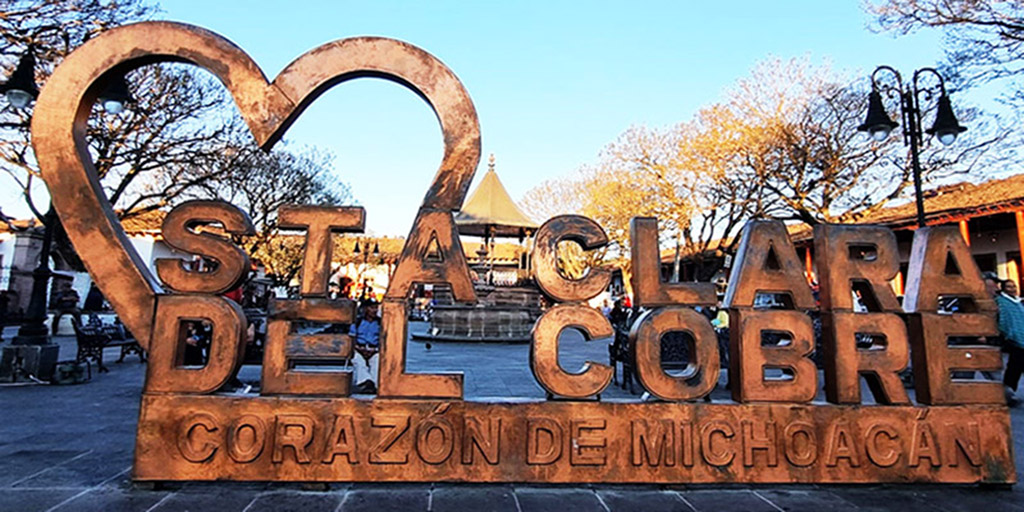 There’s no sound quite like the rhythmic striking of metal by another metal object. It’s a sound that instantly draws my ears and focus. Maybe I was a blacksmith in a former life, who knows. However what I was hearing wasn’t blacksmithing. There is a high pitched ping that is distinctive to iron and steel. What I was hearing was coppersmithing. Instead of a ringing, I hear a thwack-thwack-thwack. The softer metal stole the reverberation from the thick raising stake the man was forming the copper sheet around.
 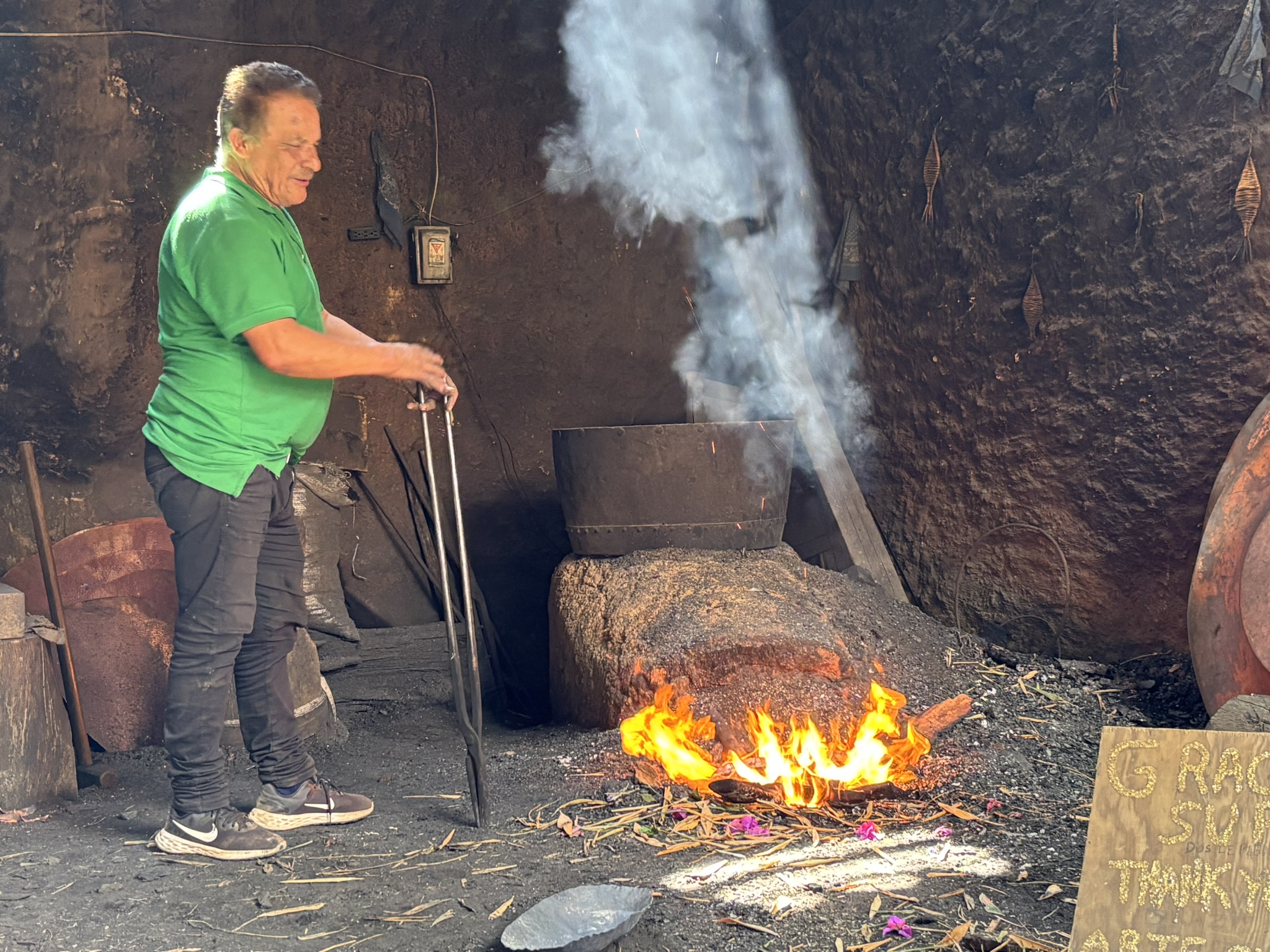 Just as Karina, her son Gerardo, and I stepped from sales shop into the workshop, the smith turned on the blowers for the forge. In just a few moments the whole space, despite being partially outdoors, filled up with smoke. The smith wore a green polo, black pants, and running shoes, not exactly what I think of as approved workwear for a fiery, metal bashing environment. Then I remembered the lack of controls on getting a driver’s license in Mexico and realized their version of OSHA might be a touch relaxed too. He shuffled over to a woodpile stacked high with slats of raw wood. He grabbed a few chunks and gently tossed them onto the rising flames before he took note of us. He greeted us with a warm “¡Buenas tardes!”
 As my eyes adjusted to the smoke and lower light levels, the old smith introduced himself as Juan Pablo. He turned and grabbed the banged up piece of copper he’d been working on and tossed it onto the embers. He then used a long set of metal working tongs to place one of the flaming logs on top of it. Unlike iron and steel, you don’t tend to work copper or silver when they’re red hot. You can, but they’re so soft that you really wouldn’t unless it was a very thick piece. What happens is called work hardening, as you pound on the copper the crystal matrix in it stiffens and makes it hard to work, so you have to anneal it. Which means heating it up until it turns red hot, which relaxes the crystal matrix, then you let it cool usually either by dunking it in water or letting it air cool. After that, one is free to go back to hammering away.
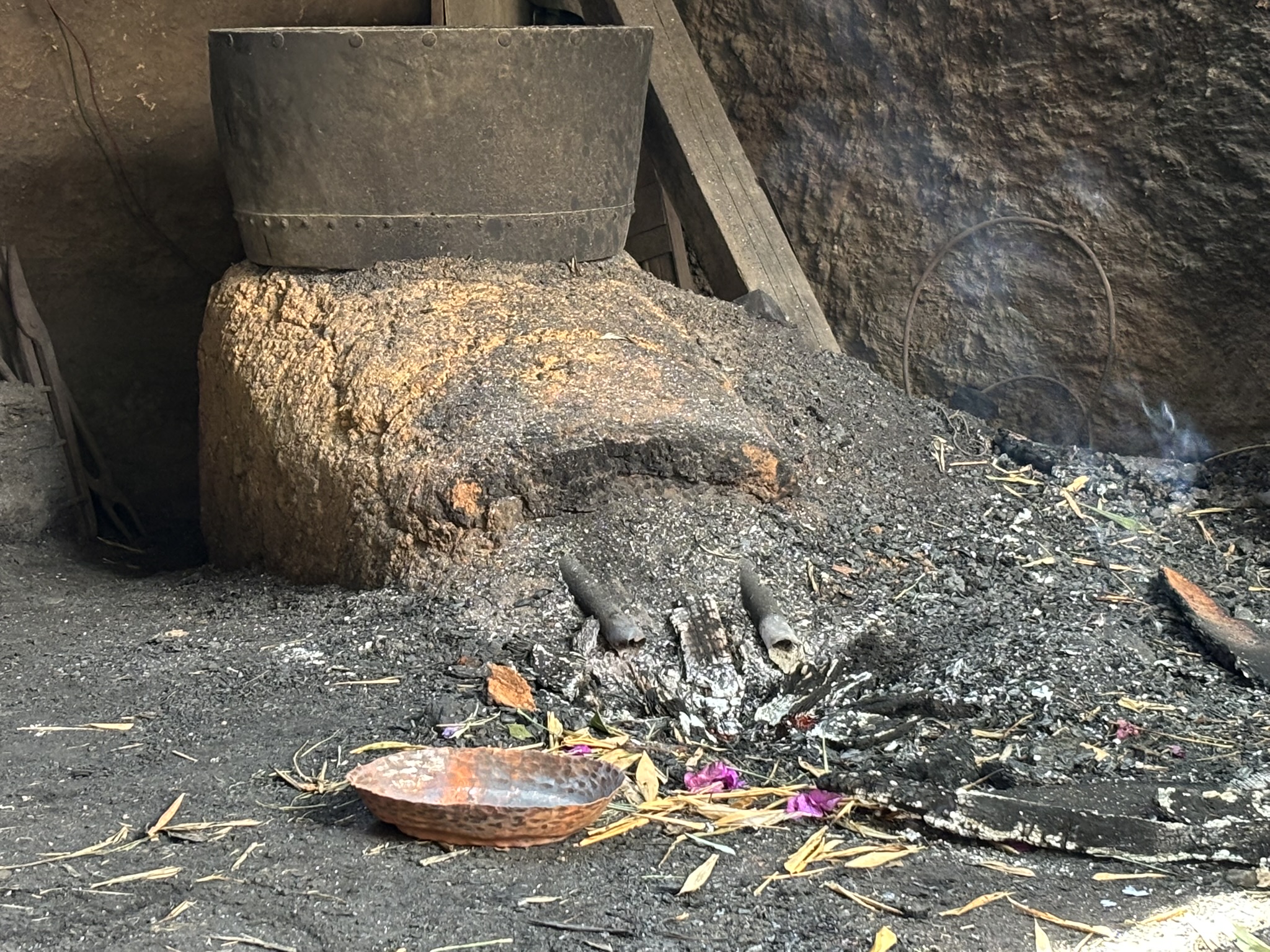 Behind him was a forge unlike any I had seen before. First off, it looked like an amorphous mass of mud or concrete on the ground with embers, ash, and unburnt wood piled up in front of it. On top of the mass was a copper tub who’s function I never figured out. From what I could figure, it had to have been some kind of protection for the blower tubes that ran underneath the pile of embers and wood. A mass that big with a tub of water on top would certainly mitigate the amount of heat going back to the blower motor or in the old days the poor bastard working the bellows. This outbuilding had a steeply sloped roof that funneled most of the smoke skyward, but certainly not all.
Juan Pablo spoke to us, explaining the process I just detailed. He was oddly soft-spoken for a man who’s whole job revolves around the loud banging of metal. Karina asked how long he had been working in copper. Sixty years, he proudly stated. Amazed at the number she asked how old he was, he grinned mischievously and said sixty-five. This was a family tradition handed down, generation after generation. He had worked with both his father and grandfather in this exact shop. This was a similar refrain to what we had heard at the museum.
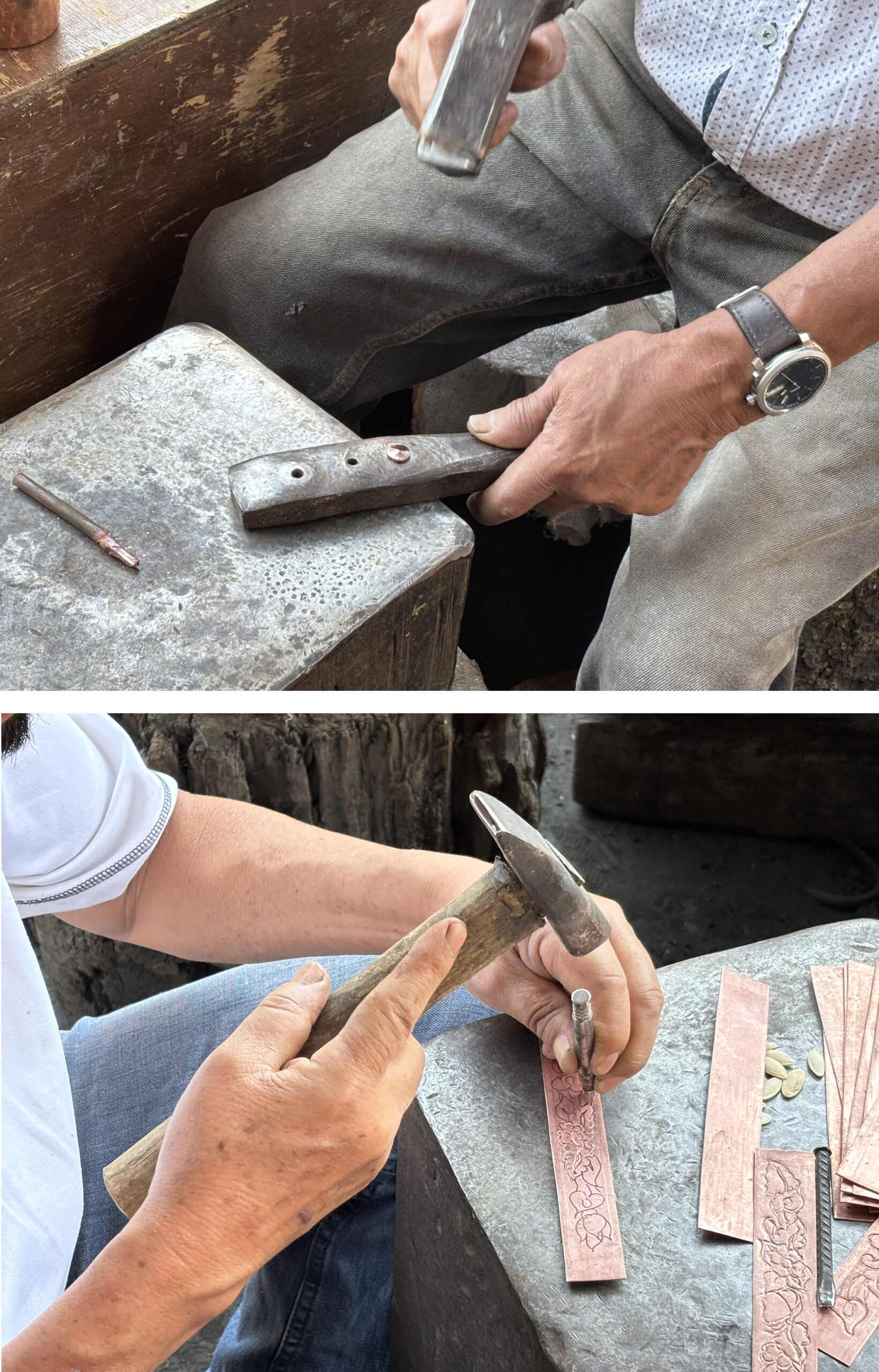 At the National Museum of Copper, three artisans gathered in the courtyard under a wooden roof. The two men hammered away, while the woman, Carmen, carefully scraped away designs in a copper plate. The older of the two men hammered out rivets that would be used to put handles on the cooking pans stacked next to his feet, while the younger hammered leaf and vine designs into copper strips. The younger man’s movements were as sure as a chef chopping onions. First he would draw the pattern he wanted in sharpie and then with a hammer and a thin piece of rebar, he had fashioned to the shape he wanted, would create the pattern. When asked, the older man told us that he had been working in copper for seventy years, he was eighty-two. The younger man was a spritely sixty-three and might as well have still been an apprentice with only fifty-two years under his belt. I decided out of politeness, not to ask Carmen how long she had been working copper for, but it had to have been at least as long as the younger man considering her equally deft touch.
  She gripped a copper plate covered with a black tar-like substance and with a scrap piece of copper scraped away a design that she had scratched into the black. The plate she was working would eventually end up in a chemical bath of uric acid to slowly eat away at the exposed copper. The tar coating was there to protect the design from the acid and would be removed later to expose the shiny copper underneath.
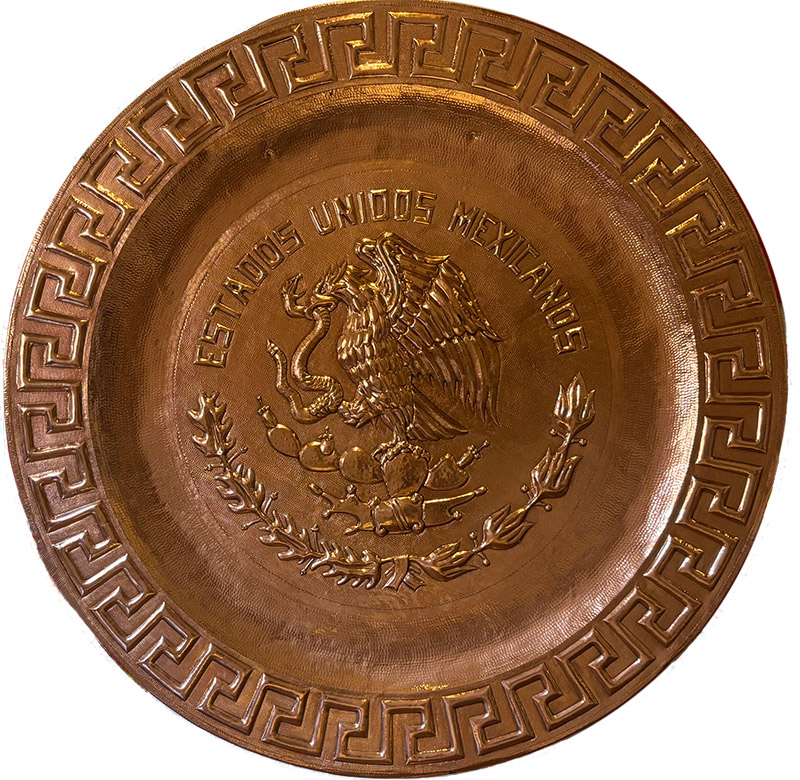
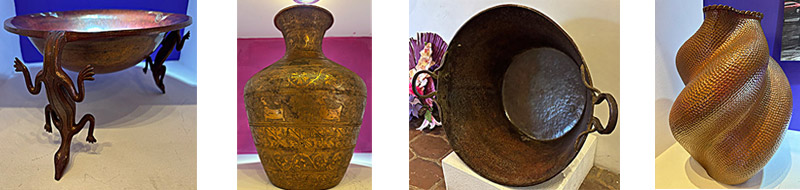
The rooms surrounding the courtyard were galleries of historical and artistic copper work. Some things were ornamental like necklaces, bracelets, belts and crowns, while others were far more functional. They had the huge cooking tubs for classic carnitas, serving dishes, display plates and cutlery. There were vases, pitchers, and even Turkish style coffee pots. If they could make it out of copper, they most certainly did. My favorite was a six foot wide plate with the Mexican eagle with a snake in it’s mouth, which I would personally like to put in my living room.
 The only thing that was missing from my trip to Santa Clara del Cobre was an actual copper smithing class. Unfortunately they don’t do those on Mondays, but there are workshops that do offer it, so I’ll just have to go back. The best I could do to soothe my rejection was to listen to heavy metal music on our hour long ride back to the house.