Should I Stay or Should I Go
By Thaddeus Tripp Ressler
Click on any image to enlarge.
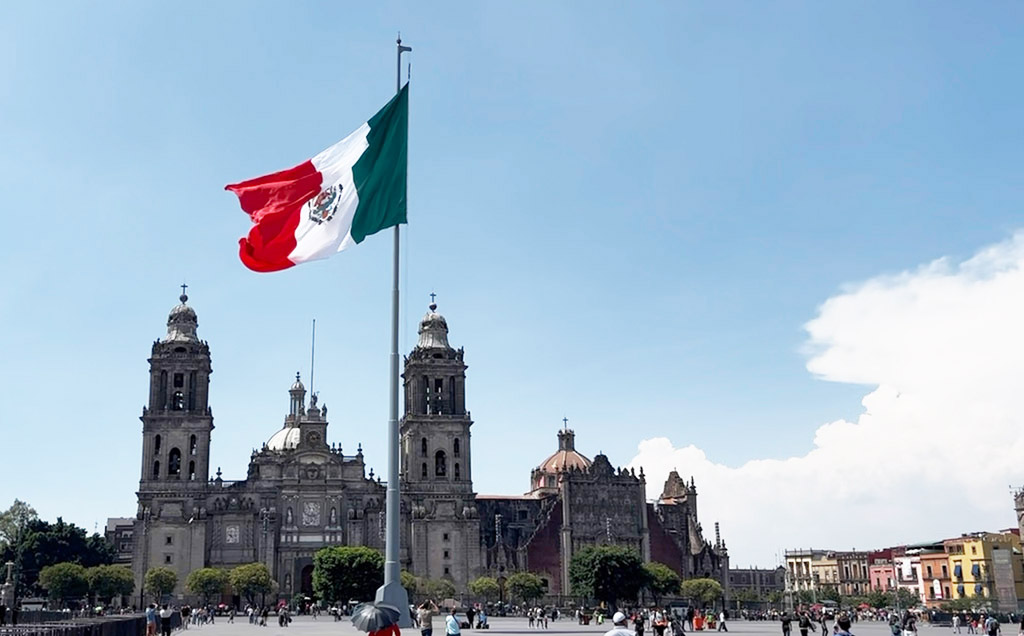
Mexico City is a cultural glut. Feet from the zocalo in El Centro are the ruins of Tenochtitlan. Across the square, The Metropolitan Cathedral in all it’s stonework glory. Within blocks there are dozens of museums of all shapes and sizes. The Anthropological Museum, or Museo Nacional de Antropología, is a short metro ride away. I managed to go to four different museums, four churches, and wander through a city park twice the size of Central Park in New York.
Thanks to my art loving, itchy-footed mother, I’ve been to art museums all over the world. I was taking drawing classes at The Met before most kids had even been to New York. I spent three consecutive days in The Louvre when I was eight, and then had to write essays mom thought up on the sculptures and artists I had seen. We went to so many museums it sometimes feel like it takes physical effort to remember all the different ones. However, I think we may have missed out by not having taken a trip to Mexico City.
Having been to so many of the great museums and cathedrals of the Western World, I’ve grown a bit jaded. I’m tired of European style religious art, not because it’s not good. The finest of them are exquisite and transcendent masterpieces worthy of long and repeated study. 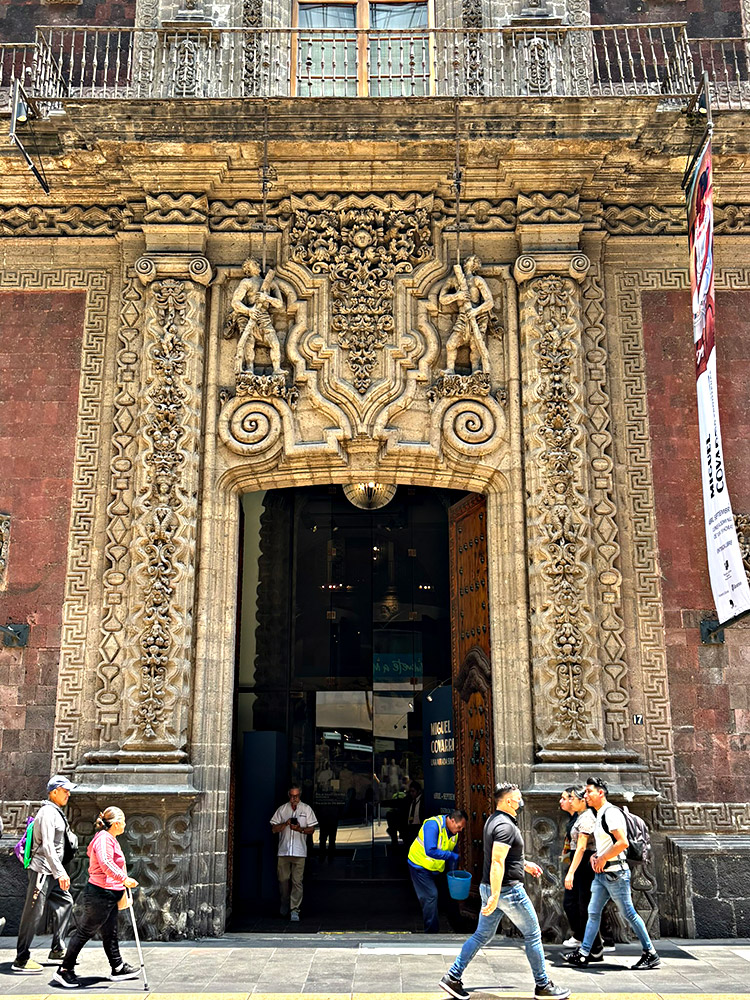 However, there are only so many versions of a tortured and dying man, or holy and precocious child paintings that I can take. Then there’s the postmodern art that fills most modern art museums. Generally speaking, that has never been able to capture my attention. But when I walked past an old familiar art museum style banner hanging in front into the Palacio de Cultura Banamex, I had to give it a try.
They were doing an exhibit on Covarrubias. I had never heard of the style, but I can admit that my fine art knowledge has definitely degraded over the years. Once inside, I did a little survey to see which way I wanted to go. That’s when the confusion started. Up front there was a huge painting of an illustrated map of Mexico, and behind it I could see paintings of Polynesia. I didn’t think much of it and started my walk-through.
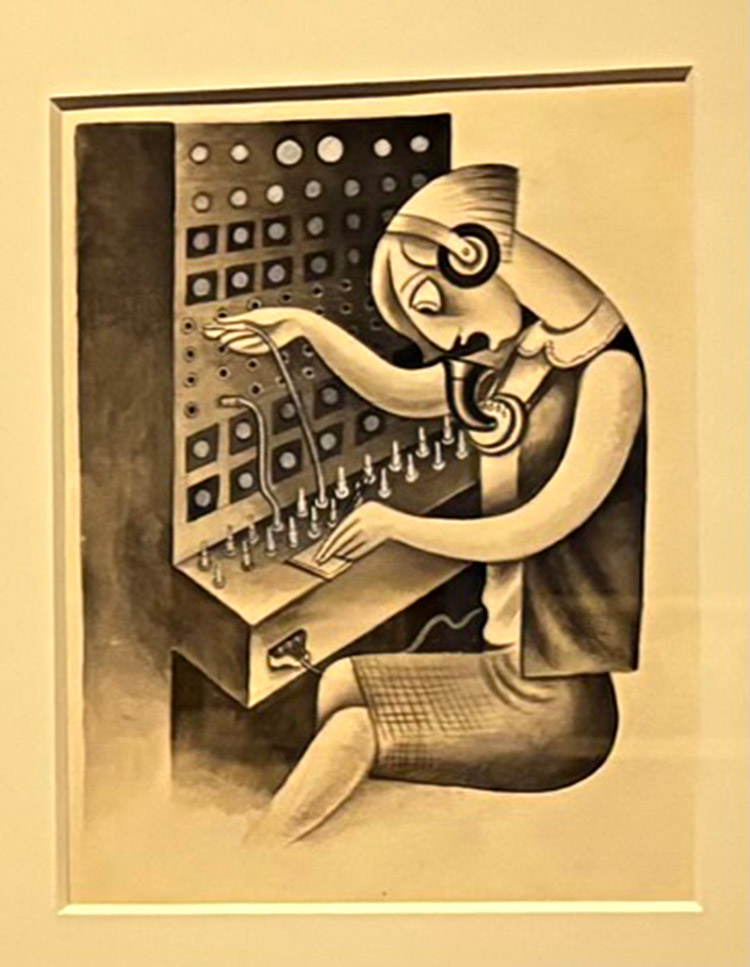 I walked the perimeter first. I looked at some beautiful Art Deco style ink drawings, then a few political caricatures. There didn’t seem to be a stylistic through line to what I was seeing though. Towards the interior there was a whole case of Vanity Fair covers with a singular style to it. For some reason, that clicked something in my brain. I looked down at the little name plates to the right of the paintings. I realized,
 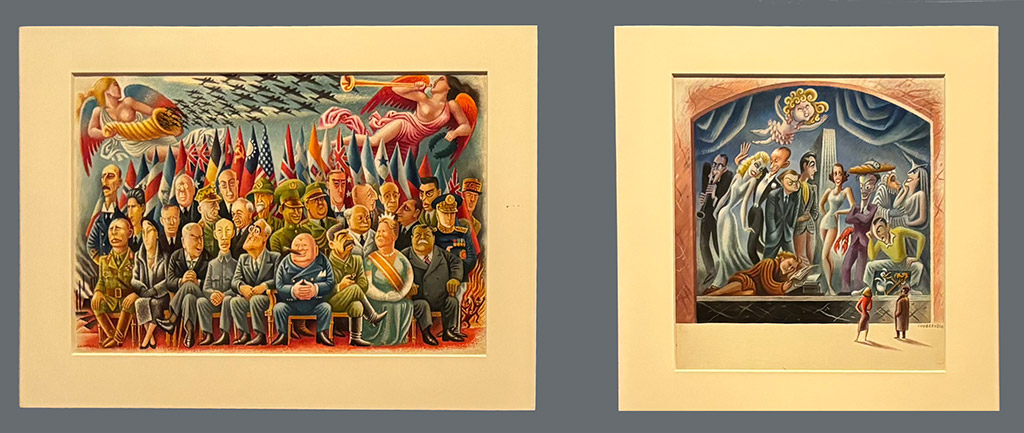 Covarrubias wasn’t a style, I had stumbled my way into the exhibit of an artist that I had never heard of before. I couldn’t remember ever having seen any of his paintings before either.
Miguel Covarrubias was an artist from Mexico City, born in 1904. When he graduated high school at the tender age of fourteen he started producing caricatures and illustrations for the Mexican Ministry of Public Education. At the ripe old age of nineteen he was sent to New York City on a grant from the Mexican Government. In NYC he met people that would introduce him to New York’s cultural and literary elite. This would lead to the Vanity Fair covers that I was looking at a hundred years later.
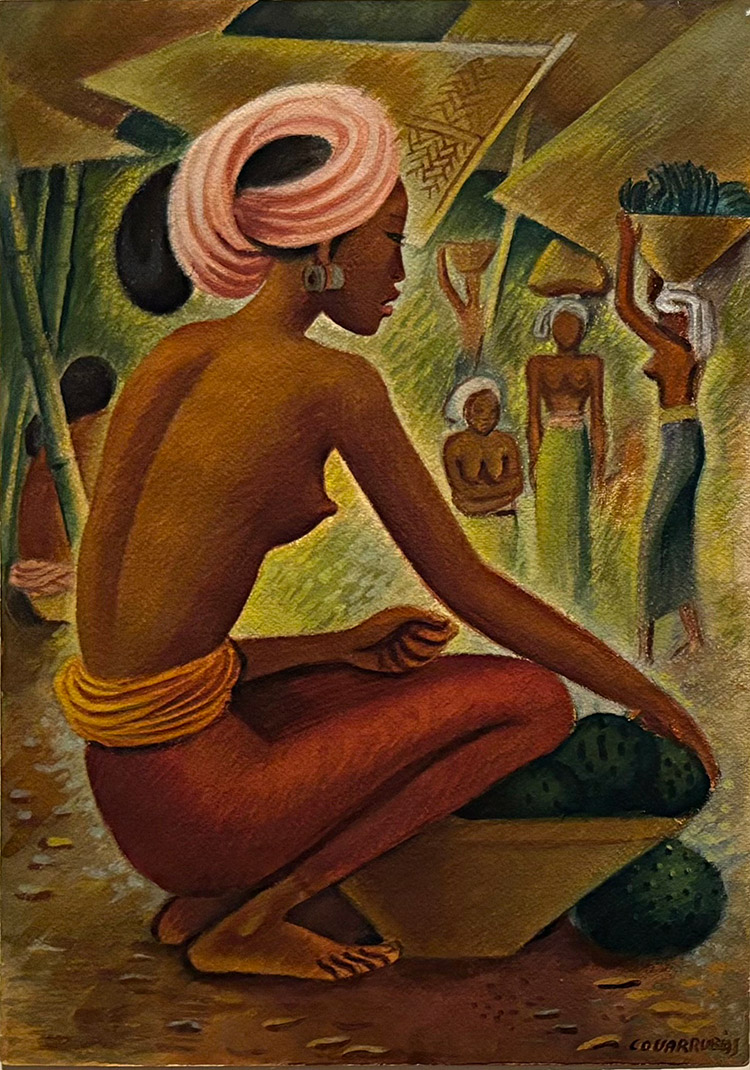 He also designed theater sets and costumes, made giant murals of illustrated maps, and in 1930, he delved into the geography of the Pacific and the island of Bali, producing some of the most illuminating ethnographic work of the era.
 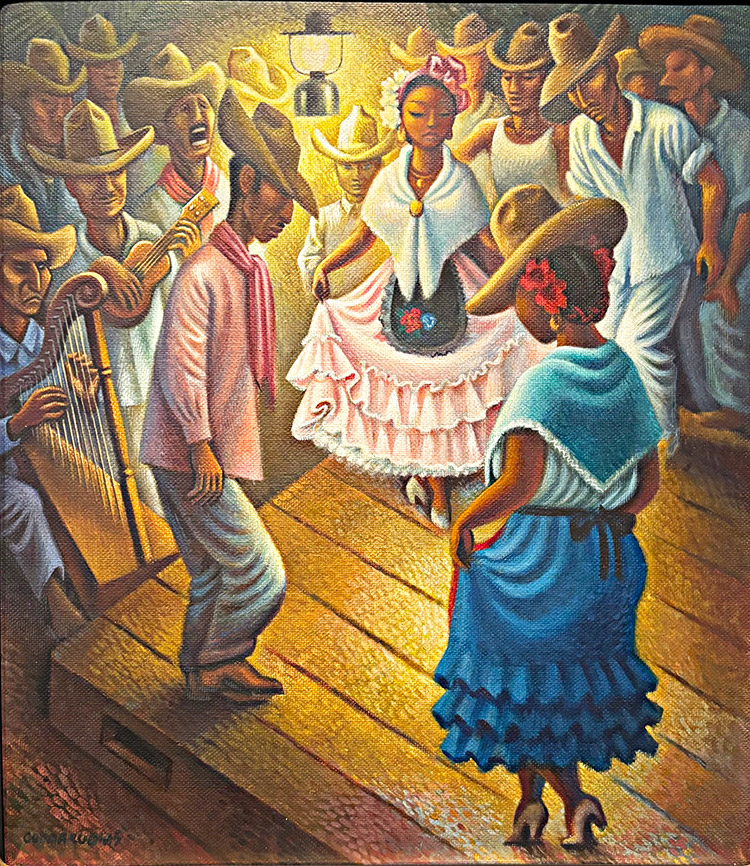 He studied Mexico, contributing understanding of pre-Hispanic art with emphasis on the Olmec culture, and its origins and influences in the Mesoamerican world.
He was proud of his Mexican roots and created many paintings that detailed the wealth of Mexican culture. He painted country folk like the Huapango dancers to the right, and also painted political figures like the revolutionary Emiliano Zapato, below to the left. He is a painter that I will be studying long after I leave Mexico, and is surely worthy of your research.
The next museum on my list was actually the first I’d intended to visit. 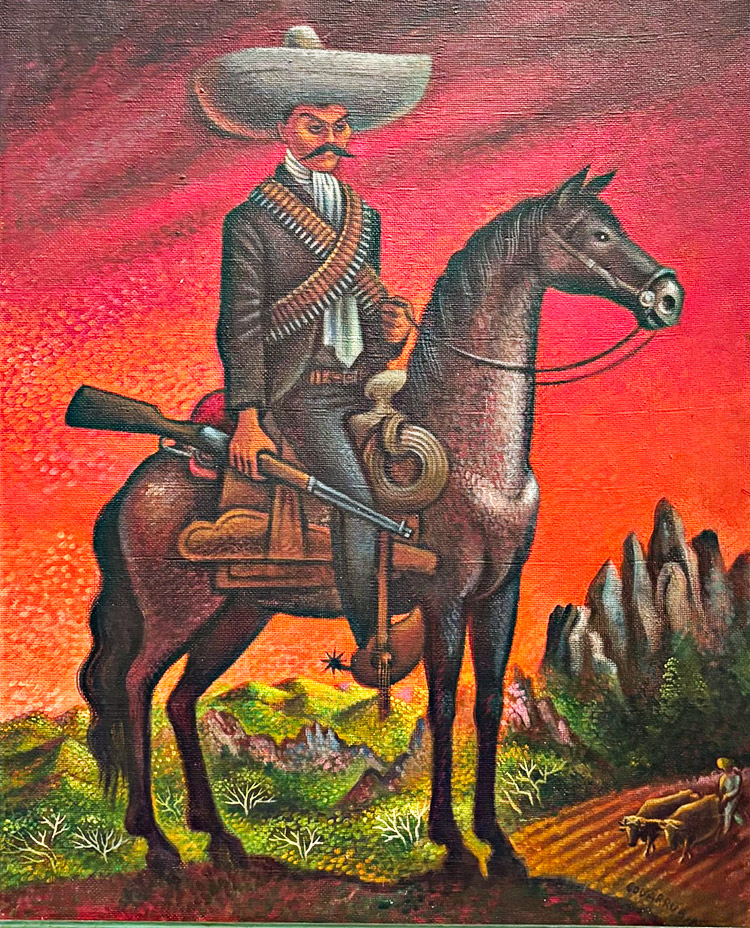 The Museum of Anthropology, is a deceptively massive building. We spent four hours, walking steadily through, really only stopping to take pictures at the very end. Even then we only got through a quarter of it. It is absolutely a museum that takes, and is worth, several days to get through. I could have spent another few days there and had promised myself to go back, but as they do, things came up.
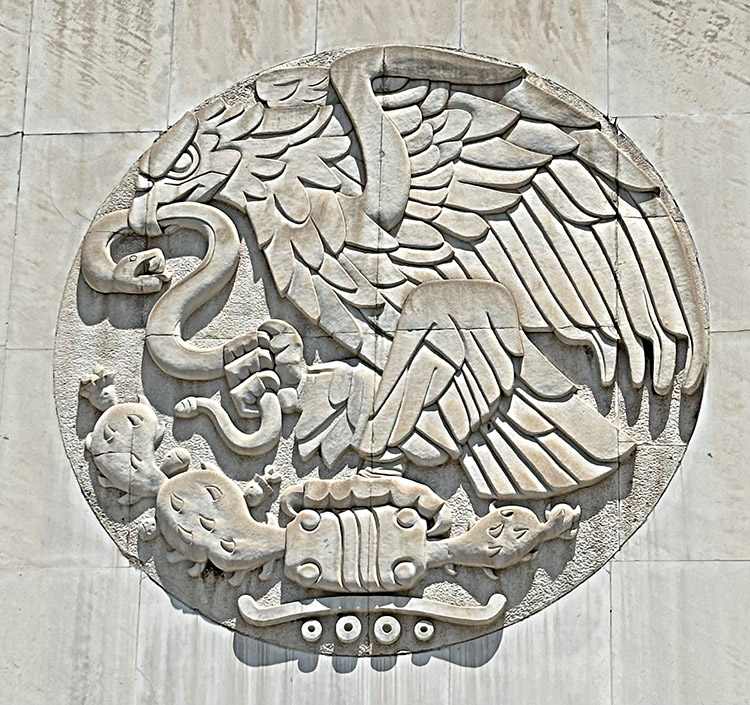 Over the entrance is a massive carving of the Mexican eagle standing on a cactus with a snake in it’s beak. This leads into a massive “vestibule” that leads to an even more massive courtyard with a fifty-five foot high fountain known as El Paraguas, or umbrella, due to it’s unique design. (below to the left)
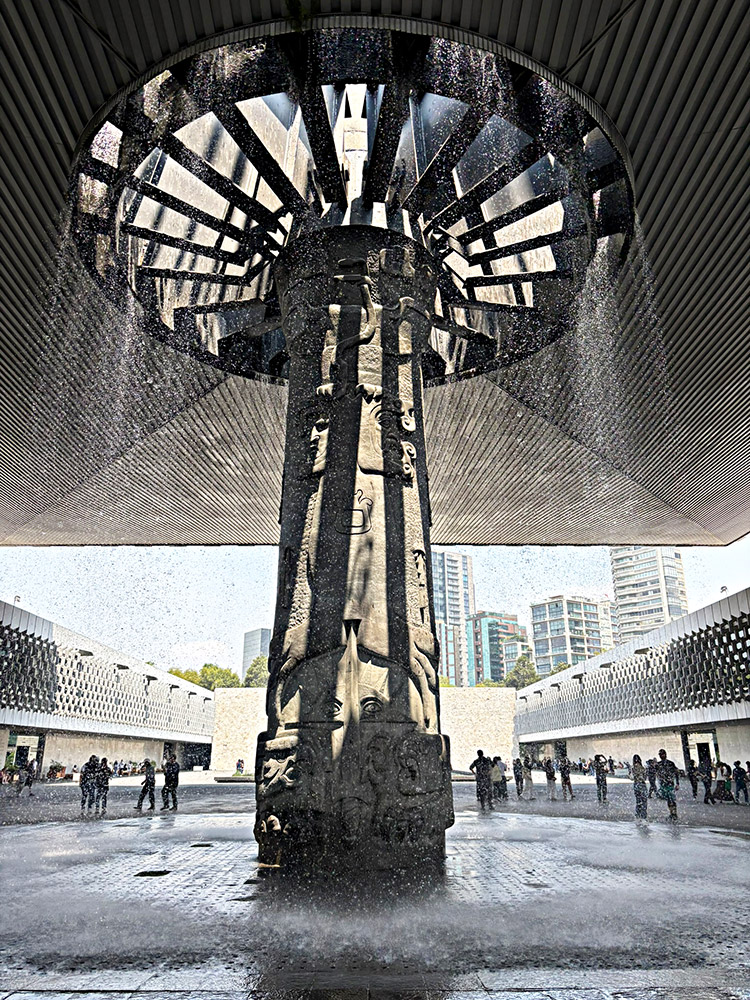 We started with the pre-history of man, but to be honest, that’s the least interesting part of any natural history museum for me. Show me the civilizations, show me the tribes, the pyramids and ziggurats. I want to see how we got from nomad to farmer, how we became the dominant species on the planet. And in Mexico, that means that I want to see the Maya, the Aztecs, and the Olmecs. The Maya and the Aztecs being the ones closest to us in history, we have the most amount of information on them. Olmecs on the other hand have a lesser known past, although it now seems that they may have been the progenitor culture of the other two plus many others in the region.
 The Olmecs are an interesting one, because there’s not a lot of information to go on. Olmec heads range from huge to massive with distinct facial features and headdress, which some
 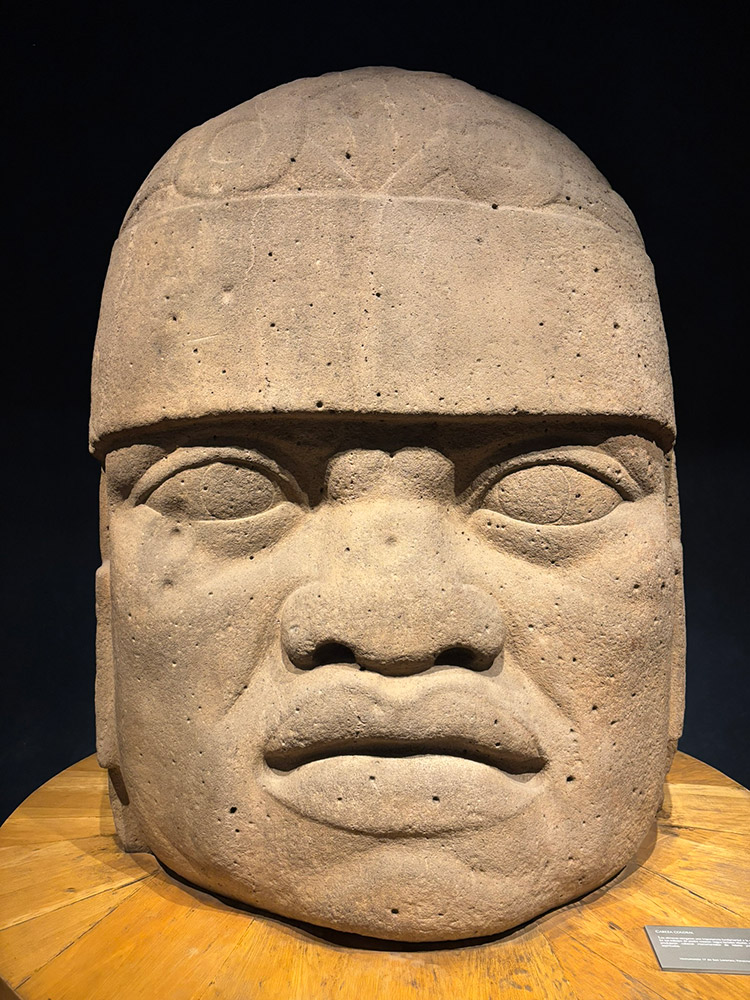 archeologists suspect mean that the Olmecs could have been trying to depict individual rulers.They all have broad faces, flat noses, thick lips, and large prominent eyes, sometimes with a slightly crossed appearance. Interestingly they do not look like ancient Aztecs or Mayans. They seem to have more Polynesian or African features than any of the other Mesoamerican people, yet no DNA evidence, and there has been plenty, traces either to the region. Compare them to the sculptures on the right, of Aztec warriors, that show a distinctly different facial structure from that of the Olmecs.
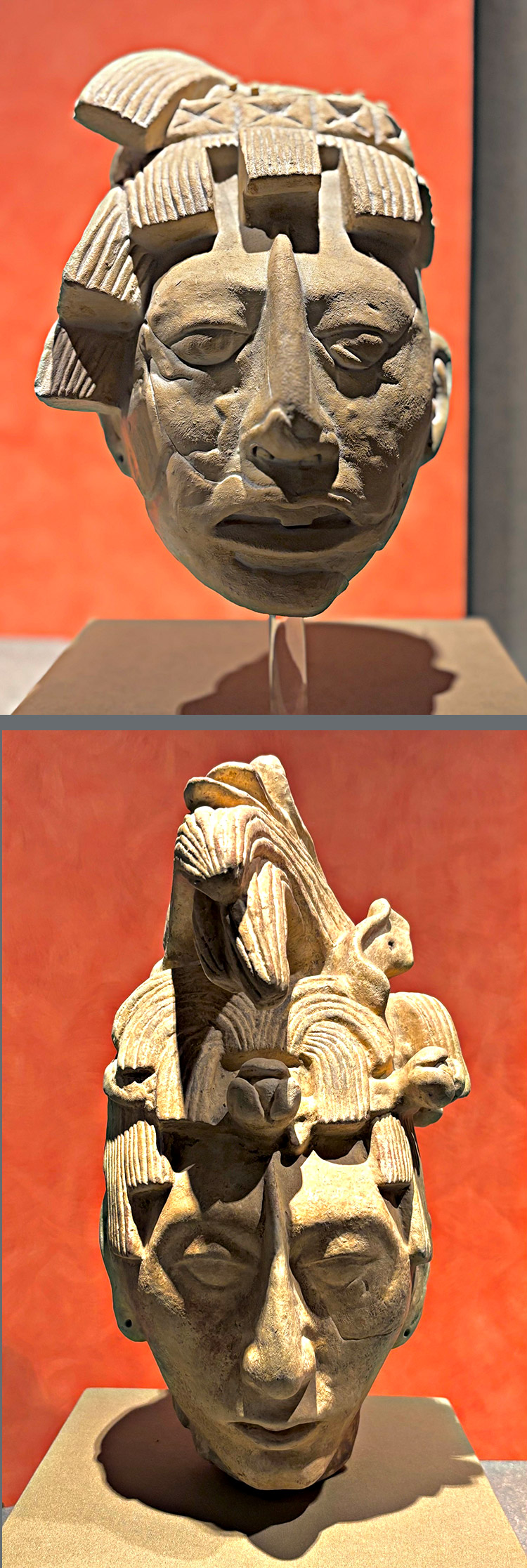
Mayans, on the other hand were well known for their sculptures of animals, priests, and gods. They made some very intricate and fantastic snakes thanks to their love and worship of Quetzalcoatl, the feathered serpent god. 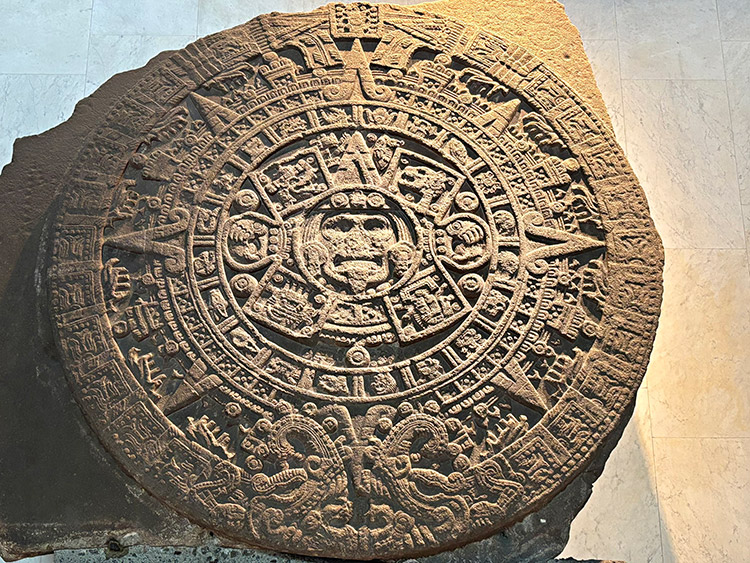 And there was of course their calendar that nearly brought us all to ruin in 2012. It was a close call but we made it through.
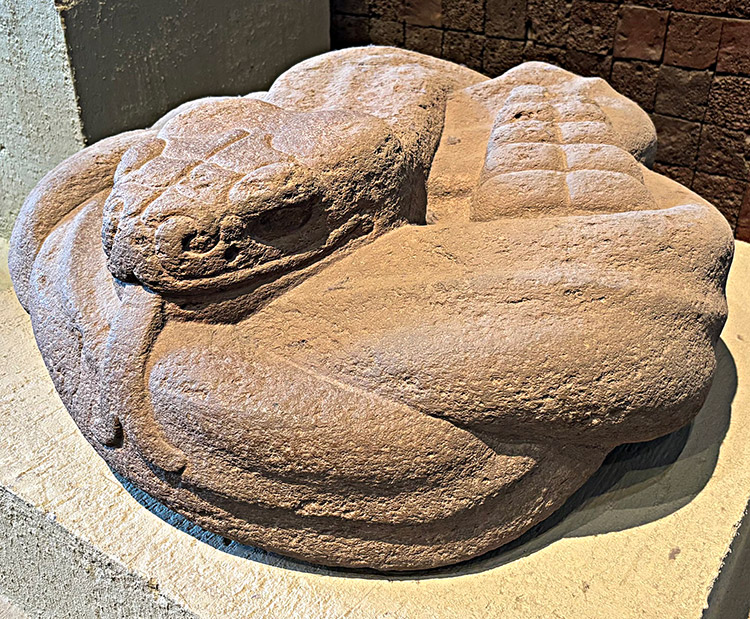 Ancient American history is a fascinating subject with a lot of new light being shed on it in recent years. In the last five years alone LiDAR imaging has revealed tens of thousands of earthworks, both village and city throughout the jungle reaches of the Yucatán and Amazon regions. That alone raises the population estimates in the Pre-Columbian new world, by many millions of people, over what was previously thought.
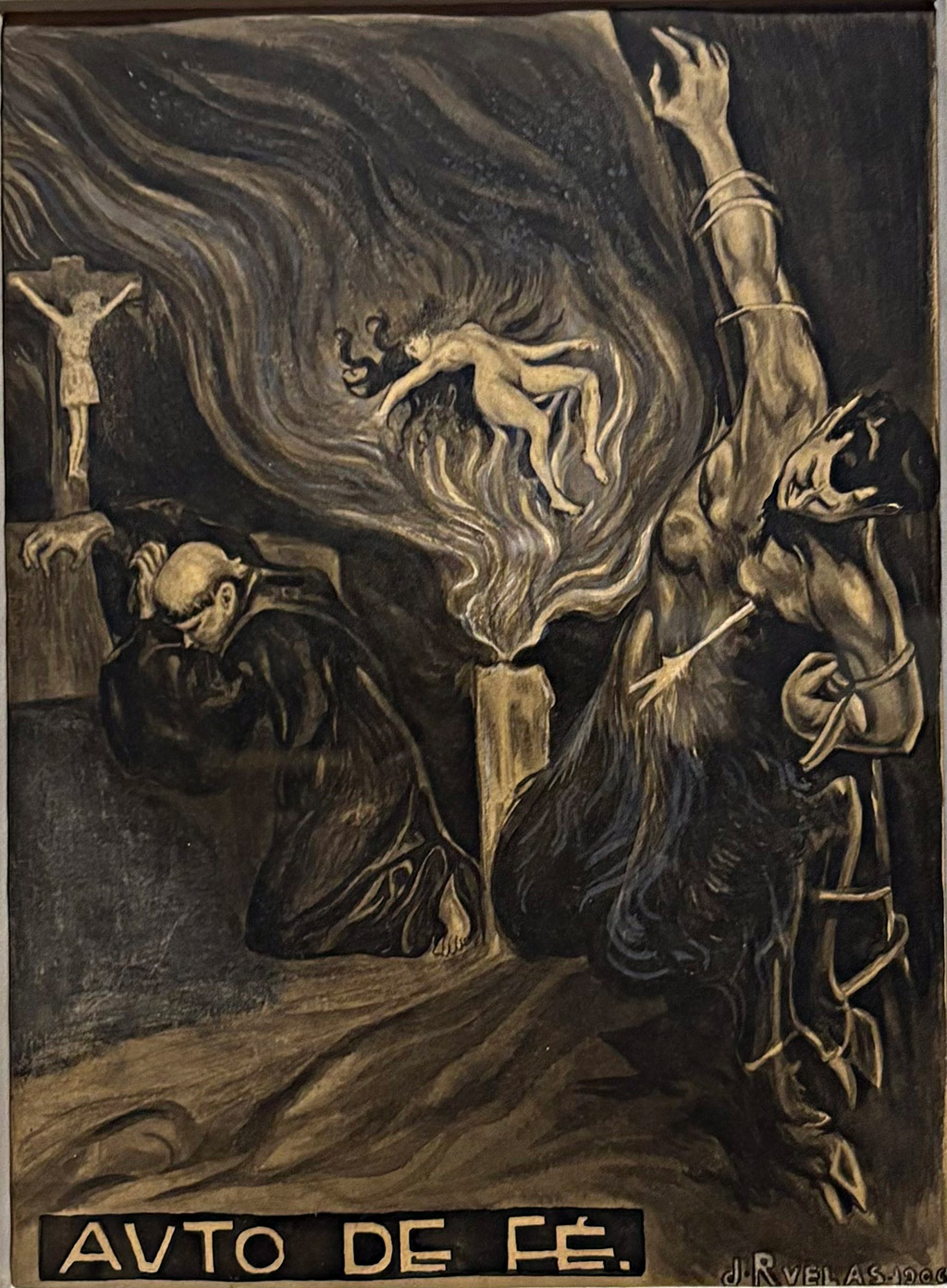 Next I checked out Museo Nacional de Arte, with their “Under the Sign of Saturn” exhibition going on. It examines the influence of the esoteric on Mexican art. The exhibit opens with a small room filled with fantastic and surreal paintings like these. The one to the left is called Auto De Fe, or Act of Faith, showing a priest praying in front of a crucifix with a vaporous
 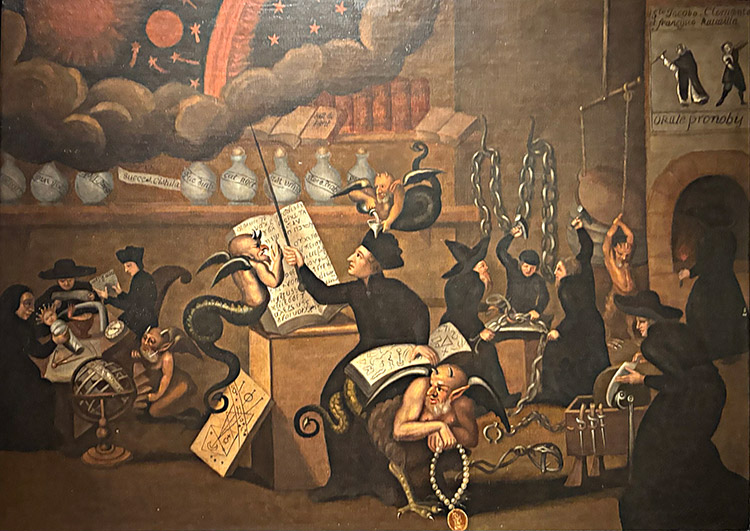 woman floating above a candle, while a demon-like creature in the foreground appears to be mortally wounded. The one to the right is called Allegory of Profane Knowledge, showing the mainstream view of esoteric knowledge, equating it to witchcraft.
Then I was confronted my this magnificent bronze. The Palmist made by an English born, naturalized Mexican citizen, Leonora Carrington. 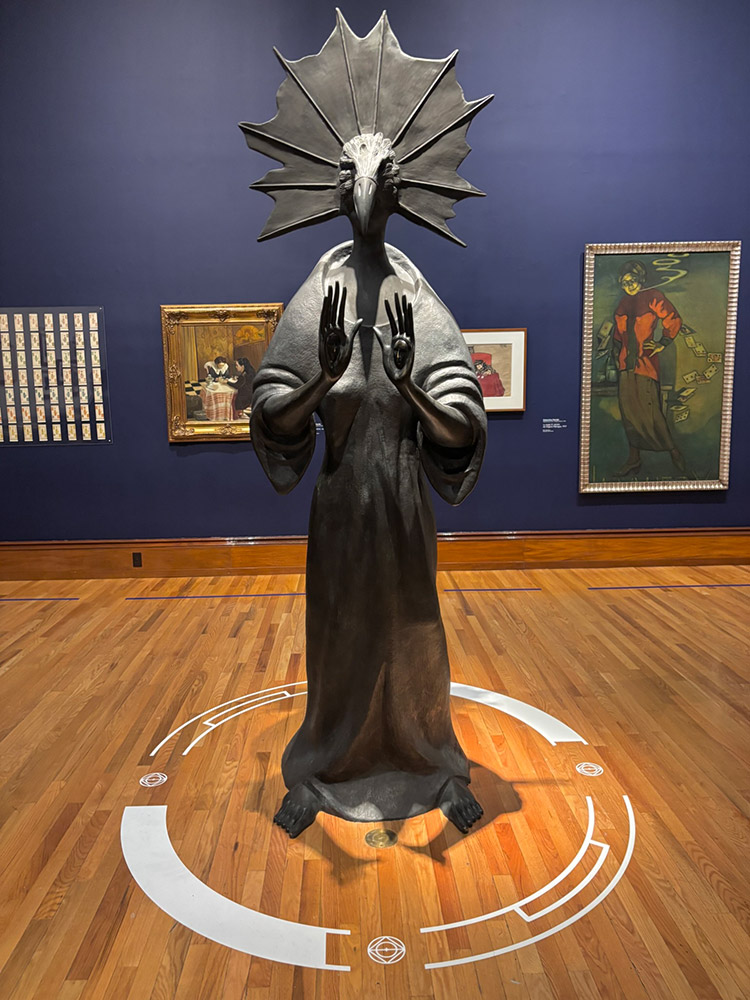 This beautifully macabre sculpture looks like it would be right at home in a fantasy movie about gods and sorcery. While at first it appears to be simple sculpture, there is a lot of little details that Ms Carrington did in a way that really had me wowed.
This etching on paper by Alberto Duero is titled The Knight, Death, and The Demon. It is a surrealistic onslaught of detail and precision. 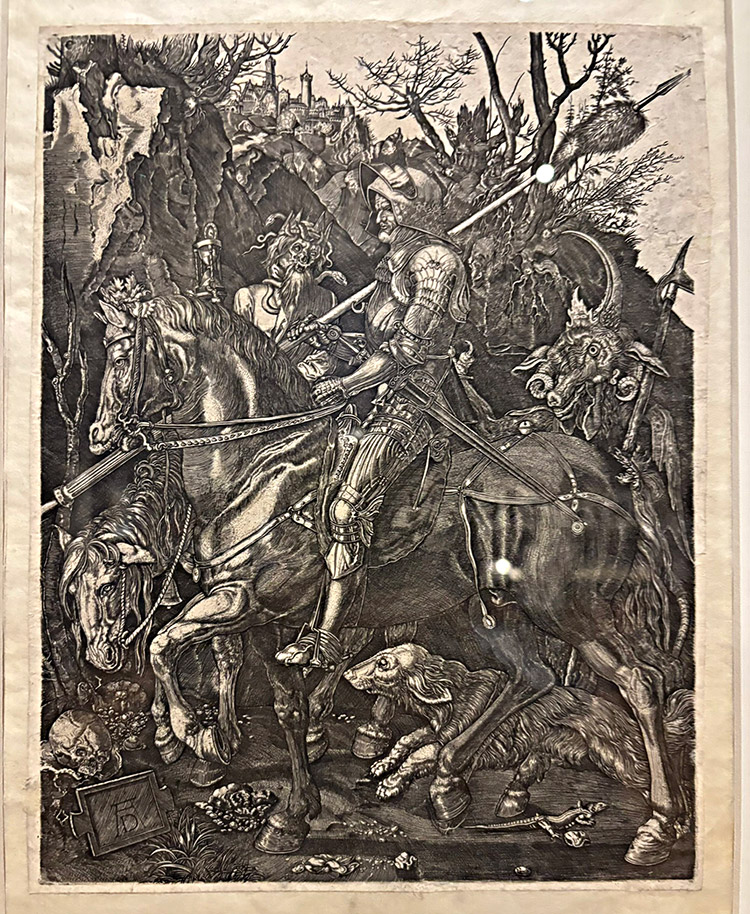 Outside of the knight and his steed, no part is untouched by oddity. Even the dog in the etching appears wrong and out of place between the legs of the two horses. It seems more a meditation on the evil that surrounds those on the militaristic heroic quests.
The rest of the exhibit and the museum were fantastic, but I do have one complaint about the museums I’ve been to in Mexico, overall their lighting could use some work. It does the job, but there were many times that I found myself trying to find a spot to stand 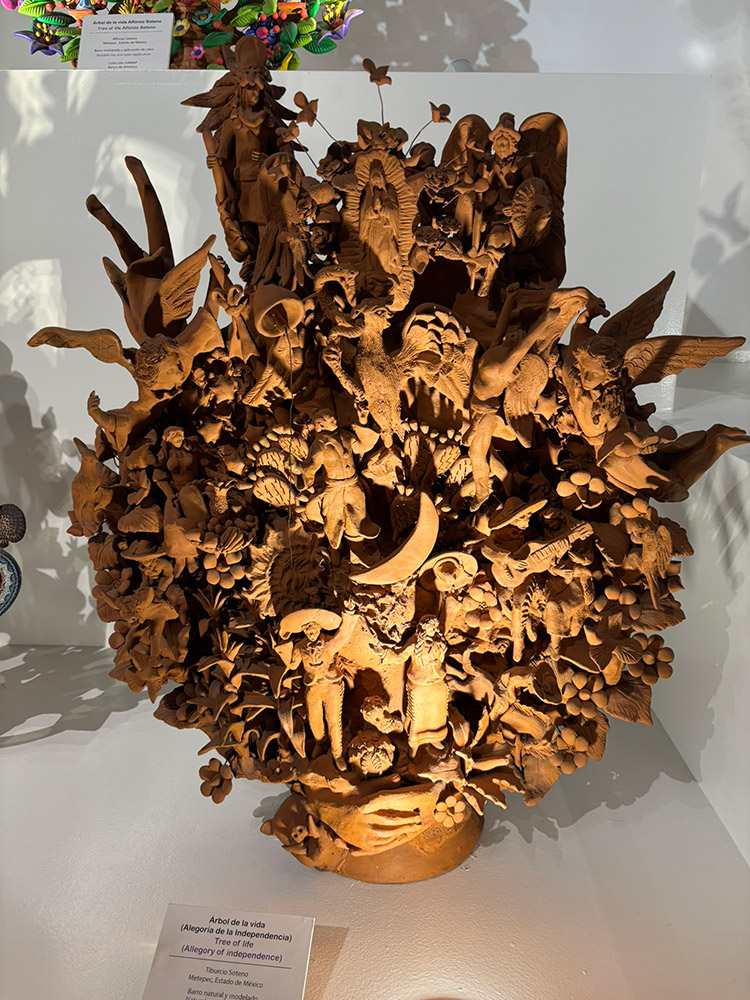 where there wasn’t glare on the oil paint, or glass. There were also a number of very intricate sculptures that were just not lit in a way that did the pieces justice. I know it’s a hard job, I did lighting for film in Los Angeles, but it’s also vital for any visual medium. I won’t harp on it, I’ll give this as an example and move on.
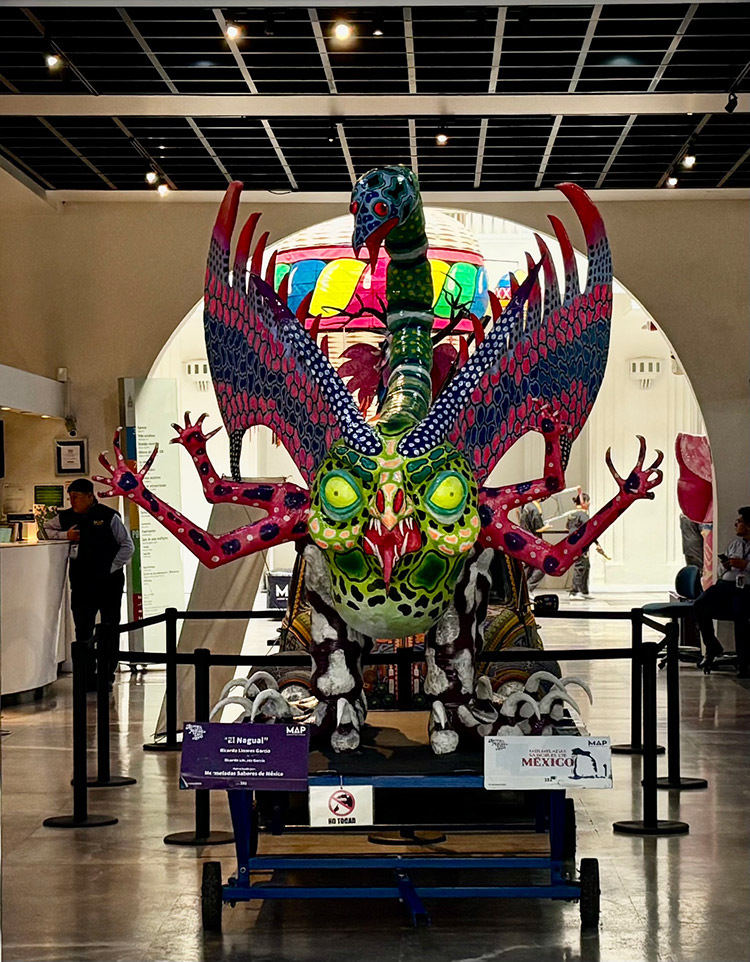 The Museo de Arte Popular greets you at the front door with this wickedly bright and terrifying Alebrije. Alebrije doesn’t have an exact definition but think along the lines of spirit animal. They are a very popular and colorful art form around Mexico. They stem from the Zapotec and Mixtec cultures where they were believed to be protectors and spirit guides. However the modern interpretation of them came in the 1930’s from Pedro Linares, a papier‑mâché artist, who began creating the surreal creatures after experiencing vivid hallucinations during an illness. Mexicans embraced them much the way they did the Catrinas that Diego Rivera popularized in the 40’s.
 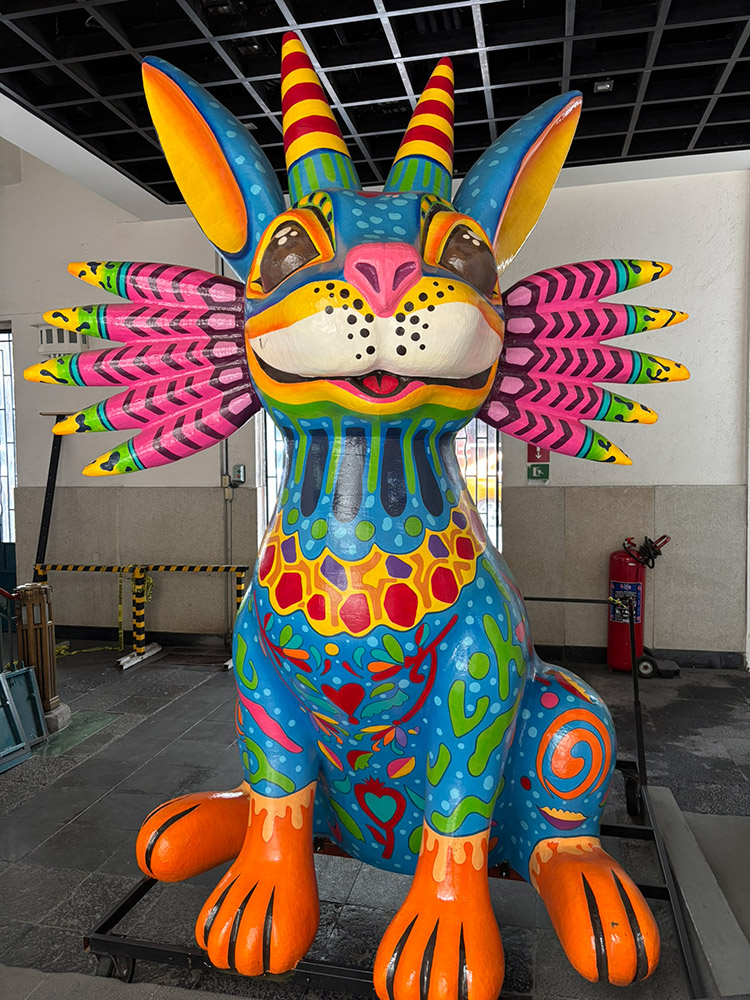 Now they can be found in everything from cartoon movies to artisan workshops to trinket sellers in every Mexican city.
One thing to keep in mind while touring Mexico City museums is that they are a bit rulish about the path you take. For instance in this museum, you’re meant to take the elevator to the fourth floor and then follow the signs for which room to go in first. And the guards will politely turn you around and ask you to go the other way. 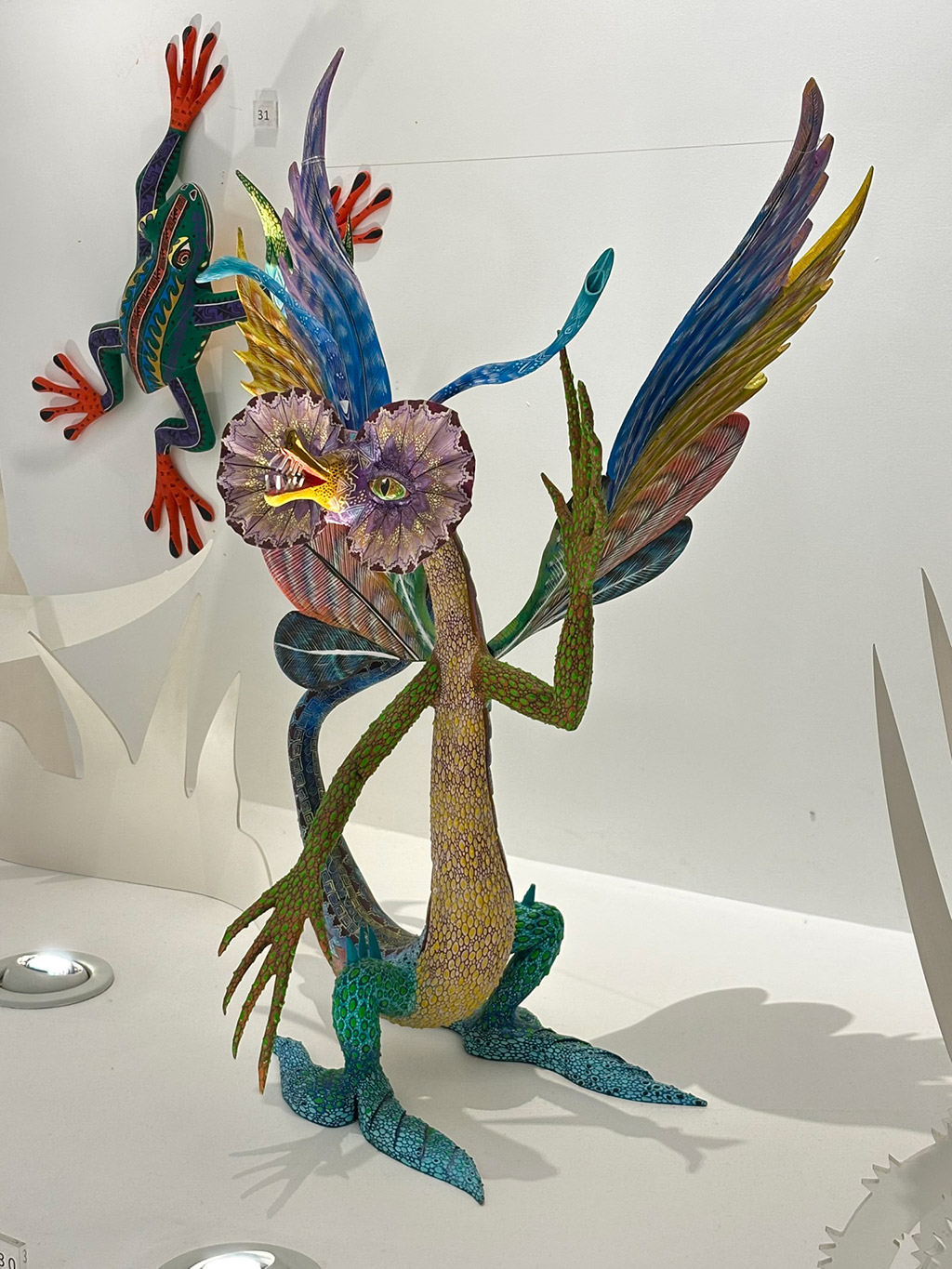 As an antiestablishment type this grated on me until I remembered the population of Mexico City and god only knows how many tourists come through. So, I begrudgingly forgave them their trespass on my artful wanderings.
Circling in the proper direction the museum started with hand crafts from each of the states of Mexico. Everything from clay figures, silver, copper, porcelain, and woodwork. To be honest though I was still fixated on the Alebrijes and the surrealistic art. Every time I saw one of the Alebrijes, it put a smile on my face.
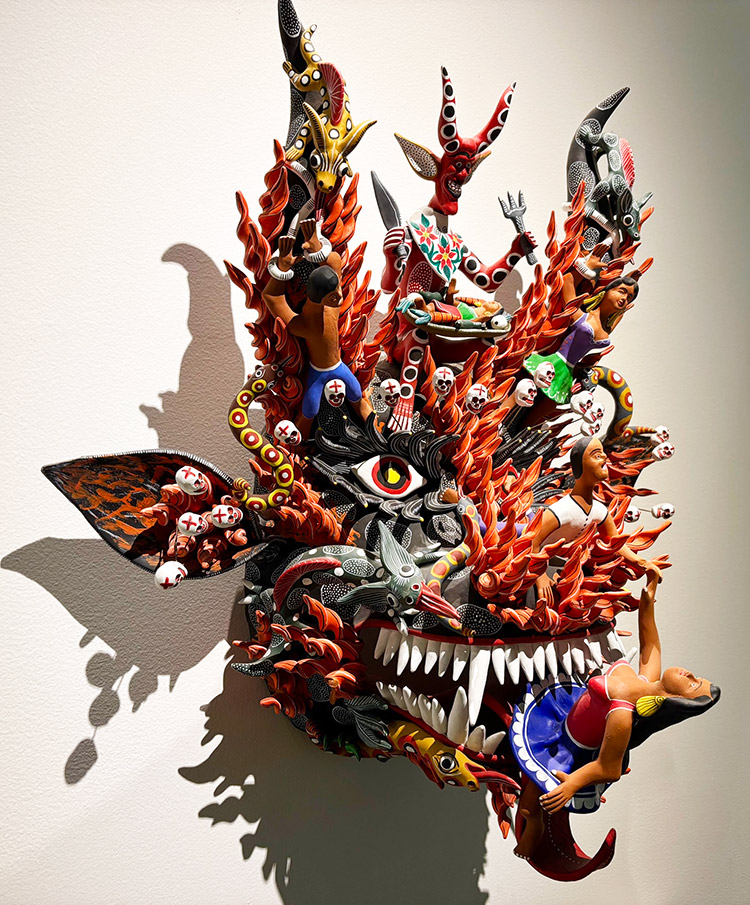 The Alebrijes are not to be confused with the other fever dream surrealism that Mexicans seem to love so much. For example the mask to the right is not an Alebrije, it’s called The Purgatory Mask. It looks a bit hellish if you ask me, but what do I know.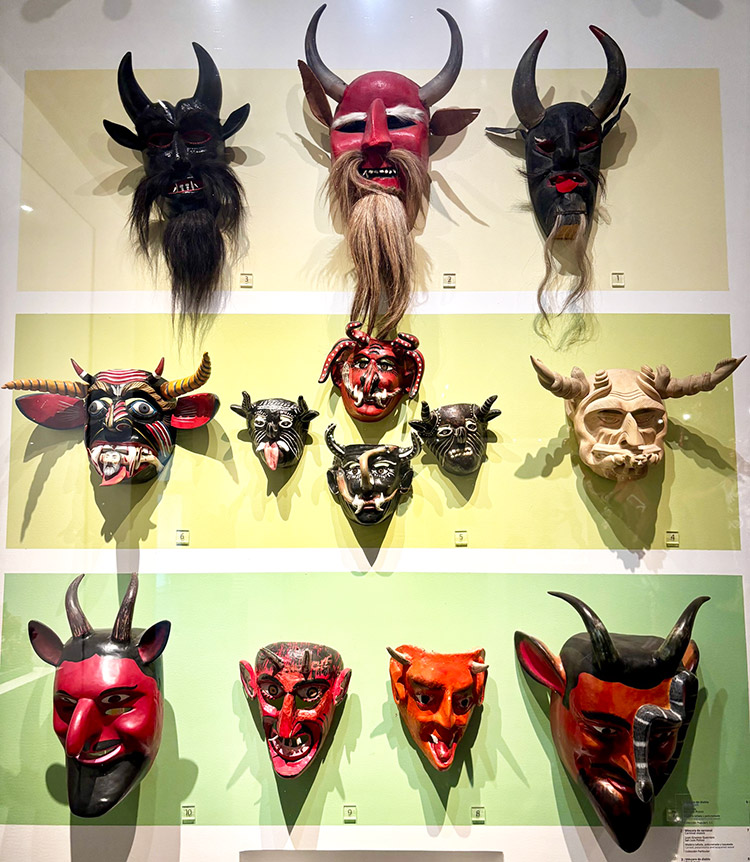
That said though, I do love a good representation of the Devil. I find him fascinating as a character of literature and liturgy. Not to mention that his representations in art are often times, in my less than humble opinion, far more interesting than those of the heroes of the Bibles.
By the time I got to the third floor of the museum I started to feel dizzy and nauseous. My body had been battling something since my second day in Mexico City. I ended up rushing through the last two floors and still managed to see some very interesting pieces of art. Like this one that’s meant to tell the history of Mexico, and made entirely of seashells. 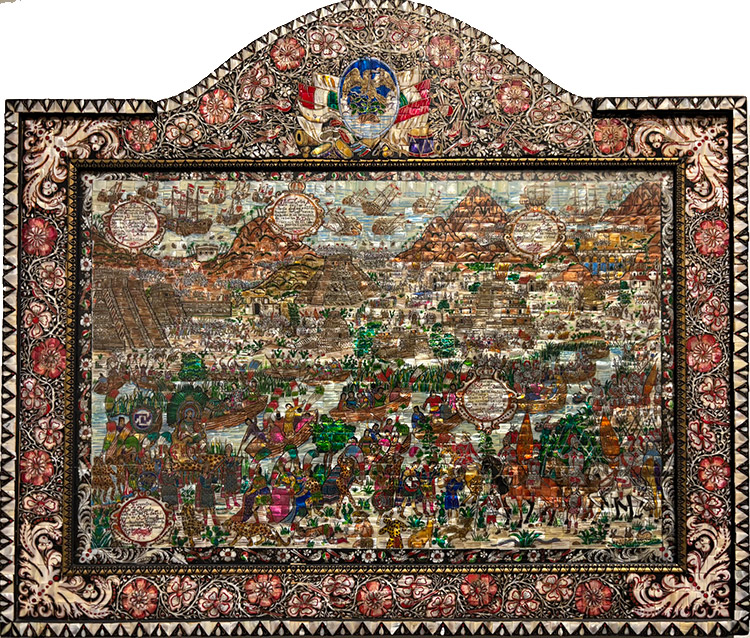
Being an agricultural country, whose national sport is the Mexican version of rodeo, Mexicans ascribe an odd and profound respect for the animals they keep. One of the animals that Mexicans have a bit of reverence for is the rooster, or gallo. 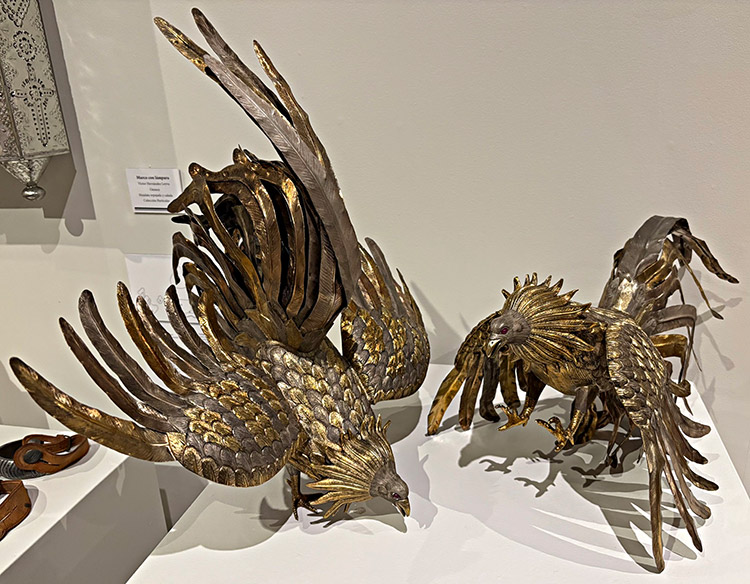 He’s meant to represent strength, courage, and virility. There are hats and shirts emblazoned with the rooster. And here are two roosters in bronze getting ready for a fight.
Mexico City is a fascinating city of twenty-two million people. It’s the seventh largest city in the world by population, second largest in the western hemisphere. It stands more than two thousand feet above Denver’s mile. It also has over a hundred and fifty museums, and over a dozen archeological sites within city limits with many more nearby. My assignment in coming to Mexico City was to determine whether it would be a mistake to skip it. Was it worth it despite the congestion (both vehicle and human), despite the air and light pollution, despite the noise, despite the price, despite the safety concerns. I only got to spend five days in Mexico City, and one of those was spent in bed helplessly sick, but even if I had only spent two days I can confidently answer this question. Yes, it would be a mistake to skip Mexico City.
__________________________________________________________________________________________________________________________________________